
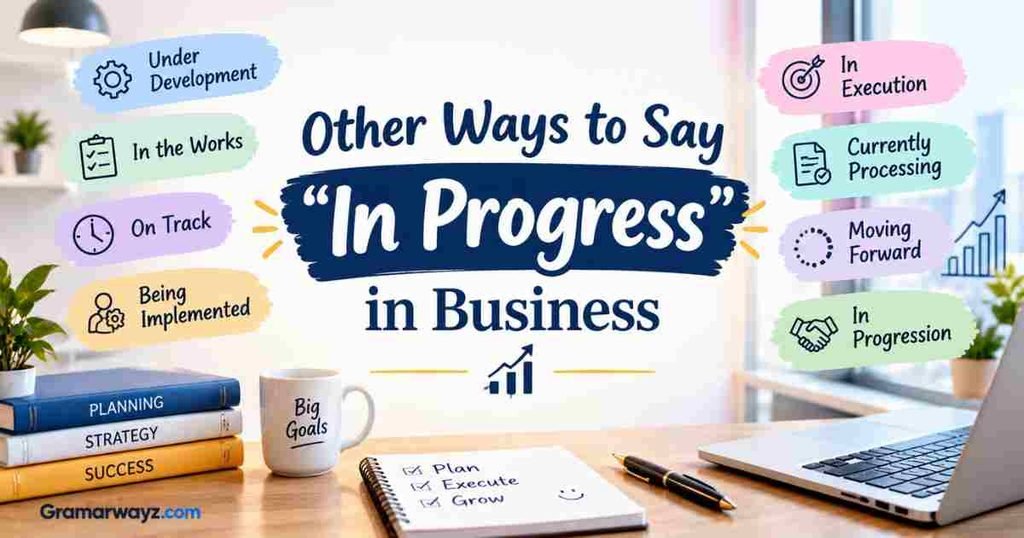

A project update sounds more professional when you choose words that clearly explain its current status. While “in progress” is common in business communication, using suitable alternatives can make emails, reports, meetings, and workplace updates sound more polished and precise.
If you are looking for other ways to say progress in business, the right phrase depends on whether a task has started, work is continuing, or a project is nearing completion. Expressions such as “underway,” “currently being worked on,” “in development,” and “ongoing” can help you communicate progress clearly.
In this article, you’ll discover professional alternatives to “in progress,” along with practical examples for business emails, project management, status reports, and everyday workplace conversations.
The Most Useful Alternatives to In Progress in Business
In business communication, the phrase “in progress” describes a task, project, or process that has started but is not yet complete. However, choosing a more specific expression can make project updates, professional emails, reports, and team discussions clearer.
The best alternative depends on the stage of work, whether a task is being developed, implemented, or actively handled. Below are useful professional alternatives to “in progress” in business, with meanings and examples to help you choose the right phrase for each situation.
Underway
Underway means that a project, task, or business activity has already started and is continuing. It is a professional, concise alternative to “in progress,” particularly in project updates, business reports, and formal emails.
Examples:
- The new marketing campaign is underway and will launch next month.
- Renovation work at the company’s headquarters is now underway.
Use “underway” when you want to emphasize that work has begun and is moving forward. It works well for projects, initiatives, campaigns, and major business activities.
Ongoing
Ongoing describes an activity, process, or project that is continuing and has not yet reached its conclusion. It is especially useful for long-term business activities, regular operations, investigations, and improvement initiatives.
Examples:
- The team is conducting ongoing research into customer preferences.
- Our employee training program is ongoing and will continue throughout the quarter.
Choose “ongoing” when the work continues over a period of time, rather than referring only to a task currently being performed. It is common in business reports, project documentation, and formal communication.
In Development
In development means that a product, service, strategy, or business solution is being created, designed, or improved. This expression is particularly common in technology, product management, and software development.
Examples:
- Our new mobile application is currently in development.
- The company has several innovative products in development for next year.
Use this alternative when a project is still being planned, designed, built, or tested before it is ready for release.
In Process
In process means that a task, procedure, or business activity has started and is moving through its required steps. It is commonly used in operational updates, administrative work, and internal business communication.
Examples:
- The employee onboarding process is in process and should be completed soon.
- Your payment request is in process with the finance department.
Use this phrase when a task is moving through a defined workflow. In polished business writing, “being processed” may sound more natural when referring to payments, applications, or requests.
Read more: Another Word for Need
Currently in Progress
Currently in progress emphasizes that a task or project is being worked on at the present time. It is useful when providing status updates to colleagues, managers, clients, or stakeholders.
Examples:
- The team is currently in progress with the website redesign.
- The quarterly financial review is currently in progress.
For more natural business English, use “the website redesign is currently in progress” or “the team is currently working on the website redesign.” These versions communicate the status more clearly.
Work in Progress
Work in progress refers to a task, project, product, or piece of work that has started but still requires further effort before completion. This phrase is widely used in project management, creative work, and business reporting.
Examples:
- The new employee handbook is a work in progress.
- Our customer service improvement plan remains a work in progress.
Choose this expression when you want to acknowledge that something is unfinished but actively developing. It can also suggest that improvements or revisions are still expected.
In the Works
In the works is a natural, slightly informal expression meaning that a project, plan, product, or initiative is being prepared or developed. It works well in team conversations, company announcements, and less formal business emails.
Examples:
- We have a new customer loyalty program in the works.
- Several improvements to our online ordering system are in the works.
Use this phrase when discussing upcoming projects that are being planned or developed. It is particularly useful when sharing progress without suggesting that the final product is ready.
Being Worked On
Being worked on means that someone is actively spending time and effort on a particular task or issue. This straightforward phrase is suitable for emails, project updates, customer support messages, and everyday workplace communication.
Examples:
- The technical team is working on the software issue.
- Your requested changes are being worked on by our design department.
This alternative is helpful when you want to explain that a task has been assigned and is receiving attention. For formal communication, identifying the responsible team can make the update more informative.
Under Development
Under development means that a product, service, system, or business initiative is being created or improved but is not yet complete. It is especially common in technology, product design, and software engineering.
Examples:
- The company’s new inventory management system is under development.
- A redesigned customer portal is under development and will be tested before launch.
Use this phrase when work involves building, designing, or refining something before it becomes available. It is more specific than “in progress” when the focus is on creating a new product or solution.
In Motion
In motion describes a project, plan, or process that has been set in action and is moving forward. In business communication, it often emphasizes momentum rather than simply stating that work has started.
Examples:
- The company’s expansion strategy is now in motion.
- After the approval meeting, the implementation plan was put in motion.
Choose “in motion” when you want to highlight that decisions have been made and the next steps are underway. The phrase “put in motion” is particularly useful when describing the action that initiated a project.
Actively Being Worked On
Actively being worked on emphasizes that a task is receiving current attention and effort. It is useful for explaining the status of important projects, technical problems, client requests, and business priorities.
Examples:
- The delayed shipment issue is actively being worked on by our logistics team.
- The developers are actively working on the requested software updates.
Use this expression when stakeholders need reassurance that a task is receiving attention. The second example demonstrates a more direct and natural way to communicate the same message.
Currently Underway
Currently underway means that a project, activity, or process has started and is continuing at the present time. It is suitable for formal reports, management updates, and corporate announcements.
Examples:
- The annual performance evaluation process is currently underway.
- Construction of the company’s new distribution center is currently underway.
This phrase works well when reporting the status of a significant activity. Since “underway” already indicates that something has started, “currently” is optional and can be removed when you want a shorter sentence.
In Progression
In progression suggests that something is developing or advancing through stages. However, it is uncommon and often sounds unnatural in everyday professional English. Alternatives such as “progressing,” “in progress,” or “moving forward” are generally clearer.
Examples:
- The project is progressing according to the agreed schedule.
- Discussions about the proposed partnership are moving forward.
Use “progressing” when you want to show that work is advancing rather than merely continuing. These alternatives sound more natural in business emails, project reports, and management discussions.
In Execution
In execution refers to the stage when an approved plan, strategy, or project is being carried out. It is sometimes used in project management and operational contexts, although “being executed” or “underway” may sound more natural in general business communication.
Examples:
- The approved marketing strategy is being executed by the communications team.
- The project has entered the execution phase following management approval.
Choose this wording when a plan has moved beyond preparation and the team is carrying out the agreed actions. It is especially relevant to project plans, strategic initiatives, and operational activities.
In Implementation
In implementation refers to the stage when a new system, policy, process, or strategy is being introduced and put into practice. In most business contexts, “being implemented” or “in the implementation phase” is more natural.
Examples:
- The company’s new attendance policy is being implemented across all departments.
- Our customer relationship management system is in the implementation phase.
Use this expression when a business change is being introduced into actual operations. It is particularly suitable for technology upgrades, organizational changes, and new workplace procedures.
See Also: Another Word for Helpful (Best Synonyms and Examples)
Moving Forward
Moving forward means that a project, decision, or business initiative is making progress toward its goal. It can describe continued activity, a clear next step, or progress after a delay or challenge.
Examples:
- The product launch is moving forward according to the revised timeline.
- We are moving forward with the client’s requested changes.
Choose this phrase when you want to communicate progress and a sense of direction. It works well in team meetings, client updates, and professional emails, especially when explaining what happens next.
Advancing
Advancing means that a task, project, or initiative is progressing toward a particular objective. It often suggests forward movement or development rather than simply remaining active.
Examples:
- The research team is advancing the development of our new product.
- Negotiations with the supplier are advancing after the latest meeting.
Use “advancing” when you want to emphasize measurable progress or development. It is particularly useful in strategic planning, research, negotiations, and projects where each stage brings the team closer to its goal.
In the Pipeline
In the pipeline refers to a project, product, service, or initiative that is planned, being prepared, or expected to happen in the future. Unlike “in progress,” it does not necessarily mean that active work has already begun.
Examples:
- Several new product features are in the pipeline for next quarter.
- The company has two major partnership proposals in the pipeline.
Use this phrase when discussing upcoming work or projects moving through a planning and approval process. If you need to confirm that work has already started, “underway” or “currently being developed” may be more accurate.
Pending Completion
Pending completion means that a task or project has not yet been finalized and is awaiting its remaining steps. It is useful in formal reports, administrative updates, and project tracking, particularly when most of the work is finished.
Examples:
- The final documentation is pending completion before the project can be closed.
- The client’s order is pending completion of the quality inspection.
Choose this phrase when a task is close to its final stage or cannot be closed until a specific requirement is met. If you want a simpler, more conversational alternative, use “awaiting completion” or “not yet complete.”
In the Final Stages
In the final stages means that a project, task, or business process is close to completion but still requires a few remaining steps. It is a useful alternative to “in progress” when communicating with clients, managers, or team members about work that is nearly finished.
Examples:
- The website redesign is in the final stages before launch.
- Our team is in the final stages of preparing the annual business report.
Use this phrase when most of the work has been completed and only final checks, approvals, or adjustments remain.
Currently Being Developed
Currently being developed means that a product, service, strategy, or system is actively being created or improved. It is particularly suitable for technology companies, product teams, and businesses introducing new solutions.
Examples:
- A new customer management platform is currently being developed.
- Our product team is currently developing a more efficient delivery system.
Choose this expression when explaining that a new idea or solution is taking shape. It provides more detail than “in progress” by identifying development as the main activity.
Learn More: Another Word for Throughout:
Work Is Ongoing
Work is ongoing means that a task, project, or business activity continues and has not yet been completed. This expression is straightforward and professional, making it suitable for reports, emails, and project status updates.
Examples:
- Work is ongoing to improve the company’s customer support services.
- Work is ongoing on the office renovation project.
Use this phrase when you want to communicate that efforts are continuing without promising a specific completion date. It is particularly helpful when providing general updates to stakeholders.
In the Planning Stage
In the planning stage means that a project or initiative is being organized before its main activities begin. This stage may involve setting objectives, assigning responsibilities, estimating costs, and preparing timelines.
Examples:
- The company’s international expansion project is in the planning stage.
- Our team is in the planning stage for next year’s marketing campaign.
Choose this alternative when a project has not yet moved into active execution. It helps colleagues and stakeholders understand that preparation, rather than implementation, is the current priority.
In the Execution Phase
In the execution phase means that a project has moved beyond planning and the team is carrying out the approved tasks. It is commonly used in project management, business operations, and strategic initiatives.
Examples:
- The office relocation project is now in the execution phase.
- Our marketing strategy has entered the execution phase following final approval.
Use this phrase when the team is actively putting a plan into action. It is especially appropriate for formal project reports and updates that describe different stages of a project lifecycle.
Making Progress
Making progress means that a task, project, or activity is moving closer to its intended goal. It suggests positive movement and can communicate improvement without implying that the work is complete.
Examples:
- The development team is making progress on the new software features.
- We are making progress toward completing the quarterly sales targets.
Choose this expression when you want to emphasize forward movement or achievements. It works well in team meetings, performance updates, and professional emails where communicating improvement is important.
Currently Being Processed
Currently being processed means that a request, payment, application, order, or document is moving through the necessary administrative or operational steps. It is particularly common in customer service and finance-related communication.
Examples:
- Your refund request is currently being processed by our finance department.
- The customer’s order is currently being processed at our distribution center.
Use this phrase when a task follows a defined procedure and is being handled by the responsible department. It gives customers and colleagues a clear indication that the request has not been finalized yet.
Under Review
Under review means that a document, proposal, application, or decision is being examined before approval, rejection, or revision. It is useful in business communication when work requires feedback or evaluation.
Examples:
- The revised contract is under review by our legal department.
- Your project proposal is currently under review by senior management.
Choose this alternative when the next step involves checking information, assessing quality, or obtaining approval. It is more precise than “in progress” because it identifies evaluation as the current activity.
In the Implementation Phase
In the implementation phase means that a business plan, policy, system, or strategy is being introduced into practical use. This expression is often used in organizational change, software deployment, and operational improvement projects.
Examples:
- The company’s new payroll system is in the implementation phase.
- Our updated customer service policy is now in the implementation phase.
Use this phrase when a decision has already been made and the organization is putting it into practice. It helps distinguish implementation from earlier stages such as planning, design, and approval.
Progressing as Planned
Progressing as planned means that a project or task is moving forward according to its agreed schedule, objectives, and expectations. It is especially useful for reassuring clients, managers, and stakeholders about project status.
Examples:
- The construction project is progressing as planned, with completion expected in December.
- Our website migration is progressing as planned and remains on schedule.
Choose this phrase when work is advancing without significant delays or unexpected problems. Use it only when the actual project status supports that statement.
Ongoing Business Activities
Ongoing business activities refers to regular operations, projects, or initiatives that a company continues to carry out over time. These activities may include customer service, sales, marketing, employee training, and operational improvements.
Examples:
- The finance department is managing ongoing business activities while preparing the annual budget.
- We are reviewing ongoing business activities to identify opportunities for greater efficiency.
Use this expression when discussing multiple continuing tasks or regular company operations rather than one specific project. It is particularly useful in business reports, operational summaries, and management discussions.
Frequently Asked Questions
What is a professional way to say “in progress” in business?
Professional alternatives to “in progress” include underway, ongoing, currently being developed, moving forward, and in the implementation phase. The best choice depends on the task and its current stage. For example, “underway” works well for active projects, while “under review” is appropriate for proposals awaiting evaluation.
How do you say “in progress” in a business email?
You can use phrases such as “The project is currently underway,” “Our team is working on the requested changes,” or “The report is being finalized.” These expressions communicate project status clearly and maintain a professional tone in workplace emails.
Is “ongoing” the same as “in progress”?
Although both phrases describe unfinished work, they have slightly different uses. Ongoing often refers to continuing activities or long-term processes, while in progress usually describes a specific task or project that has started but is not yet complete.
What is another way to say “work in progress”?
Alternatives to “work in progress” include currently being developed, underway, being worked on, and not yet complete. For example, you could write, “The new website is currently being developed” instead of “The new website is a work in progress.”
How do you professionally say a task is not finished yet?
You can say that a task is still in progress, pending completion, nearing completion, or awaiting final approval, depending on its status. If most of the work is finished, “in the final stages” may be more appropriate than a general status phrase.
What is the difference between “underway” and “in the pipeline”?
Underway means that work has already started, whereas in the pipeline usually refers to a project or initiative being planned, prepared, or expected in the future. Use “underway” for active work and “in the pipeline” for upcoming opportunities or projects.
What should I write in a project status report instead of “in progress”?
For a project status report, you can use progressing as planned, currently under development, in the execution phase, or in the final stages. Choose the phrase that accurately reflects the project’s current status so that stakeholders understand what has been completed and what remains.
Conclusion
Choosing the right alternative to “in progress” can make your business communication clearer, more professional, and more informative. Expressions such as “underway,” “ongoing,” “currently being developed,” and “progressing as planned” help explain the status of tasks, projects, and business activities.
For more precise updates, use phrases like “under review” when a decision is being evaluated or “in the final stages” when a project is nearly complete. The key is to select wording that matches the actual stage of work and your audience. Use these other ways to say in progress in business in emails, project reports, meetings, and workplace conversations to communicate progress with confidence.
Best Wish You All the Best in Your Future Endeavours
Other Ways to Say “Night Time”
Other Ways to Say “In My Opinion”
Other Ways to Say “after careful consideration”

I am the admin of Gramarwayz.com. I create and curate helpful synonyms, alternative words, and other ways to say common words and phrases to help readers improve their vocabulary and writing skills.