
Sometimes, saying “stay tuned” can feel repetitive, especially when you want your messages, emails, or social media posts to sound fresh and engaging. Finding other ways to say “stay tuned” can help you build excitement, keep readers interested, and encourage people to look forward to upcoming news, updates, or announcements.
Whether you’re writing professionally, chatting with friends, promoting a new product, or sharing an upcoming event, the right alternative can make your message more natural and memorable.
In this article, you’ll discover professional, casual, creative, funny, and friendly alternatives, along with useful examples and phrases for different situations. Keep reading to find the perfect expression for your next message.
What Does “Stay Tuned” Mean?
The phrase “stay tuned” means to keep watching, listening, or paying attention because something interesting or important will be shared soon. It is commonly used when someone wants an audience to remain interested in upcoming news, announcements, updates, or events.
For example, a company might say, “Stay tuned for our exciting new product launch,” to encourage customers to look forward to an announcement.
In everyday communication, stay tuned can also mean:
- Keep following for more information.
- Wait for an upcoming announcement.
- Watch for new updates or details.
- Stay connected to hear what happens next.
- Keep an eye out for something exciting.
You can use this expression in conversations, emails, newsletters, social media posts, marketing campaigns, and professional announcements.
When to Use “Stay Tuned”
You can use “stay tuned” when you want people to remain interested in something that will happen or be revealed in the future. It works well in both casual and professional communication, depending on the context.
Here are some common situations where this phrase fits naturally:
- Upcoming announcements: Use it when you have important news or information to share soon.
- Social media updates: Add it to Instagram captions, Facebook posts, or promotional content to build excitement.
- Business promotions: Use it to introduce upcoming products, services, special offers, or company news.
- Events and activities: Say it when sharing details about an upcoming meeting, concert, competition, or celebration.
- News and entertainment: Use it when encouraging viewers or readers to follow future episodes, stories, or developments.
- Personal conversations: Say it when you plan to share an interesting update with friends or family later.
Example: “We have something exciting coming next week, so stay tuned for more details!”
Is It Professional/Polite to Say “Stay Tuned”?
Yes, “stay tuned” is generally polite and acceptable in professional communication. It is a friendly way to encourage colleagues, customers, clients, or readers to watch for upcoming information. However, its suitability depends on your audience and the tone of your message.
In formal emails, business reports, or client communication, alternatives such as “Please look forward to further updates,” “More information will follow,” or “We will share additional details soon” may sound more polished.
Consider these examples:
- Professional: “Please stay tuned for further updates regarding the project.”
- Formal: “Additional information will be shared shortly.”
- Friendly: “Stay tuned! We have something exciting planned.”
- Customer-focused: “Keep an eye out for our upcoming product announcement.”
- Business communication: “We will keep you informed as more details become available.”
Choose the expression that best matches your relationship with the reader and the purpose of your message.
How Do You Say “Stay Tuned”?
There are several ways to say “stay tuned” without repeating the same expression. The best alternative depends on whether you are writing a formal email, sending a casual message, sharing social media content, or making a business announcement.
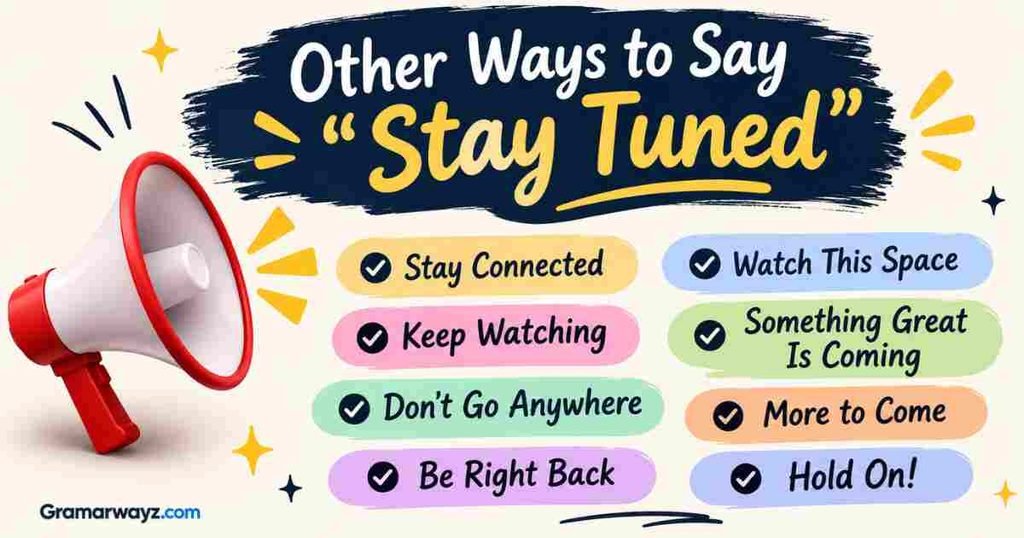
Here are some natural alternatives:
- Keep an eye out: Watch for something coming soon.
- More updates coming soon: Additional information will be available shortly.
- Watch this space: Expect something interesting or important in the near future.
- Keep watching: Continue following for new information.
- Stay connected: Remain in touch for future updates.
- Don’t go anywhere: Keep following because something is about to happen.
- Look out for more: Be ready for upcoming news or announcements.
- There’s more to come: Additional information or exciting developments are on the way.
- We’ll be back with more: Expect further details or updates later.
- Keep checking back: Visit again to find the latest information.
The key is to choose an alternative that sounds natural for your situation. For professional settings, use polished expressions, while casual conversations and social media posts allow more creative and friendly wording.
The Most Useful Alternatives to “Stay Tuned”
If you want to avoid repeating “stay tuned” in every message, several natural alternatives can help you communicate the same idea. These expressions encourage people to keep watching, check for new information, or look forward to an upcoming announcement.
Some sound professional and work well in business emails, while others are more casual and suitable for social media posts, conversations, and promotional messages. Below are some of the most useful alternatives to “stay tuned,” along with their meanings and practical examples.
Keep Watching
“Keep watching” is a simple alternative to “stay tuned” that encourages someone to continue paying attention because something interesting is coming. It is especially useful for videos, live broadcasts, entertainment updates, online content, and presentations.
Examples:
- “Keep watching to discover the exciting changes we’re preparing for our next launch.”
- “Keep watching our channel for the latest news and announcements.”
This expression works best when your audience is already following something and you want them to remain interested. It has a friendly, direct tone and is particularly suitable for video creators and social media platforms.
Stay Updated
“Stay updated” means keeping yourself informed about the latest news, changes, announcements, or developments. It is one of the most versatile alternatives to “stay tuned” because it fits both professional and casual communication.
Examples:
- “Stay updated with our website to learn about the latest product releases.”
- “Stay updated on upcoming events by following our social media pages.”
Use this phrase when you want readers, customers, employees, or followers to receive new information as it becomes available.
Keep an Eye Out
“Keep an eye out” is a friendly and conversational expression that means watching for something expected to appear or happen soon. It works particularly well when you want someone to notice an upcoming announcement, message, offer, or opportunity.
Examples:
- “Keep an eye out for our special holiday discount coming next week.”
- “Keep an eye out for an email containing your event registration details.”
This alternative sounds natural in everyday conversations and marketing messages. It is slightly more casual than “stay tuned” and encourages people to actively look for something.
Read More: Other Ways To Say “Progress In Business”
More Coming Soon
“More coming soon” tells your audience that additional information, content, products, or exciting developments will be available shortly. It creates curiosity without revealing everything immediately.
Examples:
- “We’ve shared the first collection, but there’s more coming soon!”
- “Our new website is almost ready. More coming soon!”
This expression is especially useful for promotional campaigns, product launches, website announcements, and social media captions. Unlike “stay tuned,” it focuses on the upcoming content rather than directly asking people to keep watching.
Watch This Space
“Watch this space” is a popular expression that tells people to expect something interesting or important in the near future. It is commonly used in advertising, business announcements, newsletters, and social media updates.
Examples:
- “We’re preparing something special for our customers. Watch this space!”
- “A brand-new collection is arriving next month, so watch this space for details.”
This phrase has an engaging and slightly promotional tone. It is particularly effective when you want to create anticipation around a future announcement without explaining exactly what is coming.
Stay Connected
“Stay connected” encourages people to maintain contact or follow your communication channels so they don’t miss important news. It is a warm and welcoming alternative to “stay tuned,” especially when building relationships with customers, followers, or a community.
Examples:
- “Stay connected with us on Instagram for exclusive updates and new announcements.”
- “Stay connected with our team to receive information about upcoming opportunities.”
This expression is useful when you want people to remain part of an ongoing conversation rather than simply wait for one announcement.
Keep Following
“Keep following” asks someone to continue following a person, brand, account, channel, or ongoing story to receive more information. It is a straightforward alternative to “stay tuned,” particularly in digital communication.
Examples:
- “Keep following our page to see the latest travel tips and exciting destinations.”
- “Keep following the competition to find out which team reaches the final.”
This phrase is especially useful for content creators, influencers, news publishers, and businesses that regularly share updates.
Don’t Go Anywhere
“Don’t go anywhere” is a casual and energetic expression that encourages people to remain where they are because something interesting is about to happen. It is commonly heard during television shows, live streams, interviews, presentations, and online broadcasts.
Examples:
- “Don’t go anywhere! We’ll reveal the winner right after this short break.”
- “Don’t go anywhere because our biggest announcement is coming up next.”
This phrase creates a sense of excitement and urgency. It works better in live or immediate situations than in formal business emails because it suggests that something will happen very soon.
Stay Informed
“Stay informed” means continuing to receive accurate and useful information about a particular subject, situation, or development. It is a more formal alternative to “stay tuned” and works well in professional, educational, and informational settings.
Examples:
- “Stay informed about the latest company policies through our official announcements.”
- “Stay informed about upcoming changes by checking the university website regularly.”
This phrase is ideal when the information is important and your audience needs to remain aware of developments.
Keep Checking Back
“Keep checking back” encourages someone to revisit a website, page, platform, or online resource to find new information. It is a practical alternative to “stay tuned” when updates are not available immediately.
Examples:
- “Keep checking back to see our latest collection of inspirational quotes.”
- “New event details will be published shortly, so keep checking back for updates.”
This phrase is especially useful for website owners, bloggers, online stores, and event organizers. It tells readers that information may be added or changed over time.
See Also: Other Ways to Say “Night Time”
More Updates Ahead
“More updates ahead” means additional news, information, or developments are expected in the future. It is a useful expression when you want to reassure your audience that the current announcement is not the final update.
Examples:
- “We’ve completed the first stage of the project, with more updates ahead.”
- “Thank you for supporting our new collection. More updates ahead as we introduce new designs.”
This phrase has a positive and informative tone. It works well in company announcements, project reports, newsletters, and social media posts.
Stay Alert
“Stay alert” means remaining attentive and ready to notice something important. Although it can sometimes sound like a safety warning, it can also replace “stay tuned” when people need to watch for an important announcement, notification, or opportunity.
Examples:
- “Stay alert for registration announcements because spaces are limited.”
- “Stay alert for important updates about the upcoming competition.”
This expression is more serious and urgent than most alternatives on this list. It is best used when missing an update could matter to your audience.
Keep Your Eyes Open
“Keep your eyes open” is a conversational expression that encourages someone to pay attention and notice something that may appear soon. It is a natural alternative to “stay tuned” when you want to create awareness about an upcoming opportunity or announcement.
Examples:
- “Keep your eyes open for our new collection arriving this weekend.”
- “Keep your eyes open for exciting job opportunities on our careers page.”
This phrase is friendly and slightly informal, making it suitable for everyday conversations, marketing campaigns, and social media content.
Look Forward to More
“Look forward to more” expresses the idea that additional exciting content, news, or experiences are on the way. It is a positive alternative to “stay tuned” that focuses on anticipation and encourages people to remain interested.
Examples:
- “Thank you for reading our latest travel guide. Look forward to more helpful tips and destination ideas.”
- “This is just the beginning of our new collection, so look forward to more exciting designs.”
This expression works well in newsletters, brand announcements, content updates, and friendly messages. It creates a welcoming tone and helps build interest in future content.
Be on the Lookout
“Be on the lookout” means staying aware and watching for something expected to happen or become available. It is a useful alternative to “stay tuned” when you want people to actively notice upcoming news, messages, announcements, or opportunities.
Examples:
- “Be on the lookout for an invitation to our upcoming celebration.”
- “Be on the lookout for special offers and exclusive deals arriving this month.”
This expression sounds natural in both casual and professional communication, although it is more conversational than formal. It works particularly well in promotional emails, customer notifications, event announcements, and everyday messages.
Don’t Miss What’s Next
“Don’t miss what’s next” encourages people to pay attention because something interesting, exciting, or important is coming. It creates curiosity and gives readers a reason to follow future announcements or content.
Examples:
- “Don’t miss what’s next as we reveal our upcoming product collection.”
- “We’ve got exciting plans for the coming weeks, so don’t miss what’s next.”
This phrase is particularly useful for social media promotions, product launches, event announcements, and marketing campaigns. It sounds engaging and creates anticipation without being overly formal.
Stay With Us
“Stay with us” is a friendly expression that asks people to remain connected or continue following something. It is commonly used during live broadcasts, presentations, online events, and ongoing conversations.
Examples:
- “Stay with us as we share more exciting details about the upcoming event.”
- “Stay with us for the next part of our journey and discover what’s coming.”
This alternative works well when you want to maintain your audience’s attention and encourage them to follow an ongoing experience.
Keep Listening
“Keep listening” encourages someone to continue paying attention to spoken information because more details or interesting news are coming. It is especially suitable for podcasts, radio programs, interviews, presentations, and audio announcements.
Examples:
- “Keep listening to our podcast for more helpful tips and expert discussions.”
- “Keep listening because we’ll announce the competition winner at the end.”
Use this expression when your audience is receiving information through audio or spoken communication. It sounds more natural than “stay tuned” in situations where listening is the main activity.
Watch for Updates
“Watch for updates” means keeping an eye out for new information, changes, or announcements. It is a direct and practical alternative to “stay tuned,” particularly in professional communication and online announcements.
Examples:
- “Watch for updates on our website as we finalize the event schedule.”
- “Watch for updates about your application status in the coming days.”
This phrase is useful for business emails, project announcements, customer notifications, and website updates. It tells readers to expect new information without creating unnecessary excitement or urgency.
Stay in the Loop
“Stay in the loop” means remaining informed and involved in what is happening. It is a popular conversational expression used in workplaces, group discussions, social media communities, and everyday communication.
Examples:
- “Join our mailing list to stay in the loop about upcoming company events.”
- “Stay in the loop with our latest announcements by following our Facebook page.”
This expression is particularly useful when you want people to feel included and informed rather than simply waiting for news.
Learn More: Other Ways to Say “In My Opinion”
More Details Coming Soon
“More details coming soon” tells your audience that additional information will be shared in the near future. It is a clear and professional alternative to “stay tuned” when some information is available but the complete announcement is not ready.
Examples:
- “Our annual celebration is officially announced, with more details coming soon.”
- “We’re preparing a new service for our customers. More details coming soon!”
This phrase works well for business announcements, event invitations, product launches, and promotional campaigns. It creates anticipation while keeping the message straightforward.
Keep Yourself Posted
“Keep yourself posted” means making an effort to stay informed about the latest developments or changes. It is commonly used in everyday conversations and workplace communication, although it can sound less natural than simply saying “keep posted.”
Examples:
- “Keep yourself posted about the meeting schedule in case anything changes.”
- “Keep yourself posted on the latest developments by checking the project group.”
This expression is suitable when someone needs to follow ongoing information or remain aware of changes. In casual communication, “keep me posted” is another common expression, but it asks someone else to provide updates to you.
Stay in Touch
“Stay in touch” means maintaining communication with someone over time. Although it does not always mean waiting for an announcement, it can work as an alternative to “stay tuned” when the goal is to maintain an ongoing connection.
Examples:
- “Stay in touch with our team to hear about future opportunities and announcements.”
- “Thanks for attending our event. Stay in touch for news about upcoming activities.”
This phrase is especially useful in personal conversations, professional networking, customer relationships, and community messages. It has a warm and friendly tone that makes people feel welcome.
Follow Along
“Follow along” encourages people to continue watching or following a series of updates, activities, stories, or events as they happen. It is a natural alternative to “stay tuned” for ongoing content and experiences.
Examples:
- “Follow along as we share behind-the-scenes moments from our latest project.”
- “Follow along with our travel journey to discover new places and experiences.”
This expression works particularly well for social media stories, video series, live events, tutorials, and travel updates. It invites the audience to become part of the experience instead of simply waiting for information.
Keep Up With Us
“Keep up with us” means continuing to follow a person, organization, brand, or group to learn about its latest activities and developments. It is a friendly phrase that works well in digital communication.
Examples:
- “Keep up with us on Instagram for the latest news, photos, and announcements.”
- “Keep up with us as we introduce new products throughout the year.”
This expression is useful for businesses, influencers, content creators, and online communities that regularly publish new content.
Stay Ready
“Stay ready” encourages someone to remain prepared for something expected to happen. It can replace “stay tuned” when an upcoming opportunity, announcement, or event requires attention or quick action.
Examples:
- “Stay ready for registration because applications will open next Monday.”
- “Stay ready for our biggest announcement of the year.”
This phrase has a confident and energetic tone. It works best for competitions, product releases, limited-time offers, and important announcements where people may need to act quickly.
Wait for More
“Wait for more” suggests that additional information, content, or announcements will be shared later. It is a short and simple expression that can create curiosity about what is coming next.
Examples:
- “This is only the beginning, so wait for more exciting updates.”
- “We’ve shared the first announcement. Wait for more details next week.”
This expression is suitable for casual messages, entertainment updates, and promotional content. However, it can sometimes sound like a direct instruction, so “There’s more to come” may feel warmer and more natural in professional writing.
Explore: Other Ways to Say “after careful consideration”
More News to Come
“More news to come” means that additional announcements or important information will be shared in the future. It is a straightforward alternative to “stay tuned” that works well when communicating ongoing developments.
Examples:
- “We’ve officially announced our new partnership, with more news to come.”
- “The first phase of the project is complete, and there’s more news to come.”
This expression is particularly useful for business updates, press announcements, newsletters, and public communications. It helps readers understand that the current announcement is only part of a larger development.
Keep Checking for Updates
“Keep checking for updates” asks people to revisit a particular source regularly to find the latest information. It is a practical alternative to “stay tuned,” especially when updates are published gradually.
Examples:
- “Keep checking for updates on our website to see the latest event announcements.”
- “Keep checking for updates about your delivery status through the tracking page.”
This phrase is useful for websites, online services, customer support messages, application processes, and event schedules.
Watch Out for What’s Next
“Watch out for what’s next” encourages people to pay attention to upcoming developments, announcements, or exciting content. It creates curiosity and gives a message an energetic, promotional feel.
Examples:
- “We’ve got some amazing surprises planned, so watch out for what’s next!”
- “Our latest collection is just the beginning. Watch out for what’s next.”
This expression can work in social media campaigns, entertainment announcements, product promotions, and informal messages. However, “watch out” can also mean being careful or alert to danger, so consider using “look forward to what’s next” when you want a softer and more positive tone.
Updates Are on the Way
“Updates are on the way” means that new information, announcements, or changes will be shared soon. It is a natural alternative to “stay tuned” when you want to let people know that something is being prepared.
Examples:
- “We’ve been working on some improvements, and exciting updates are on the way.”
- “The event schedule is being finalized. Updates are on the way!”
This phrase is suitable for business announcements, website notifications, project updates, and social media posts. It sounds positive and informative without asking readers directly to wait.
Something Exciting Is Coming
“Something exciting is coming” creates curiosity by suggesting that an interesting announcement, experience, or opportunity will be revealed soon. It is a creative alternative to “stay tuned,” particularly for promotional and informal communication.
Examples:
- “We’ve been preparing something special for our customers. Something exciting is coming!”
- “A brand-new collection is almost ready. Something exciting is coming your way.”
Use this expression when you want to build anticipation around a product launch, special event, new project, or upcoming announcement.
Don’t Miss the Next Update
“Don’t miss the next update” encourages people to keep following a particular source so they don’t overlook important new information. It is a direct and engaging alternative to “stay tuned.”
Examples:
- “We’re announcing the final event details tomorrow, so don’t miss the next update.”
- “Follow our page and don’t miss the next update about our latest collection.”
This expression works well for social media campaigns, newsletters, news announcements, and ongoing projects. It is especially useful when the next update contains information your audience will find valuable.
Keep Your Attention Here
“Keep your attention here” asks people to focus on the current conversation, presentation, or platform because more information may follow. It can be used as an alternative to “stay tuned,” although it sounds more direct and less conversational.
Examples:
- “Keep your attention here as we reveal the winners of this year’s competition.”
- “Keep your attention here for the important announcements coming next.”
This phrase is most appropriate for presentations, live events, online broadcasts, and situations where you want your audience to remain focused. In everyday conversation, “keep watching” or “stay with us” may sound more natural.
Be Sure to Check Back
“Be sure to check back” politely encourages someone to revisit a website, page, or platform later to find new information. It is a helpful alternative to “stay tuned” when updates will be published at a later time.
Examples:
- “We’re adding new resources to our website, so be sure to check back next week.”
- “More event information will be available shortly. Be sure to check back for details.”
This expression is especially useful for bloggers, website owners, online stores, and event organizers. It gives readers a clear action to take rather than simply asking them to wait.
More Information Coming Soon
“More information coming soon” tells readers that additional details will be available shortly. It is a clear and professional alternative to “stay tuned,” particularly when an announcement has been made but some information is still being prepared.
Examples:
- “Our new membership program will launch soon, with more information coming soon.”
- “The conference dates have been announced. More information coming soon!”
This phrase is useful for business emails, product announcements, event promotions, and official website updates. It keeps the audience informed while creating interest in the next announcement.
Stay Close
“Stay close” is a short, friendly expression that encourages someone to remain connected or keep following something. Depending on the context, it can also mean staying physically nearby, so it is best used carefully when replacing “stay tuned.”
Examples:
- “Stay close to our page because we’re sharing an exciting announcement tomorrow.”
- “Stay close to our community for upcoming news, events, and special updates.”
This expression works best in informal communication, social media posts, and community messages. For professional emails, “stay connected” is usually a clearer and more polished choice.
Keep Track of Updates
“Keep track of updates” means monitoring new information, changes, or developments over time. It is a practical alternative to “stay tuned,” especially when information is released regularly.
Examples:
- “Keep track of updates on our website to follow the progress of the project.”
- “Customers can keep track of updates through their online accounts.”
This phrase is particularly useful for project management, customer service, application processes, and business communication. It suggests actively monitoring information rather than simply waiting for an announcement.
There’s More to Come
“There’s more to come” means that the current announcement, experience, or collection of information is not the end. Additional content, news, or exciting developments will follow.
Examples:
- “Thank you for supporting our new collection. There’s more to come in the following weeks.”
- “We’ve shared the first chapter of our journey, but there’s more to come!”
This is one of the most natural alternatives to “stay tuned” for casual conversations, social media captions, newsletters, and promotional messages.
Stay Tuned for What’s Next
“Stay tuned for what’s next” is an extended version of the original phrase that encourages people to keep following because another announcement, development, or experience is coming. It adds a sense of curiosity and anticipation to your message.
Examples:
- “We’ve completed our first major project. Stay tuned for what’s next!”
- “Our latest product is finally here. Stay tuned for what’s next in our collection.”
This expression is suitable for social media updates, business promotions, video content, and event announcements. It is particularly effective when you want to maintain audience interest while introducing future plans or developments.
Further Updates Will Follow
“Further updates will follow” is a professional expression meaning that additional information or announcements will be provided later. It is a polished alternative to “stay tuned,” particularly in formal and business communication.
Examples:
- “The initial project details have been shared. Further updates will follow as we make progress.”
- “Your application is currently under review. Further updates will follow by email.”
This phrase works well in official announcements, business emails, project reports, and customer communications. It sounds informative and assures readers that more details will be provided.
Please Await Further Updates
“Please await further updates” politely asks someone to wait for additional information. It is more formal than “stay tuned” and is commonly used in professional notices, customer service messages, and official communications.
Examples:
- “We are reviewing your request. Please await further updates from our support team.”
- “The event schedule is being finalized. Please await further updates on our website.”
Use this expression when communicating with customers, employees, applicants, or people waiting for an important decision.
Hang Tight
“Hang tight” is a casual expression that means to be patient and wait for something to happen. It is a friendly alternative to “stay tuned” when an update, answer, or announcement is expected shortly.
Examples:
- “Hang tight! We’re preparing some exciting news for our followers.”
- “Your results will be available shortly, so hang tight while we finish the process.”
This phrase is especially suitable for casual conversations, social media posts, live streams, and customer support chats. Avoid using it in highly formal business correspondence because it has a relaxed tone.
Hold On for More
“Hold on for more” suggests waiting because additional information, entertainment, or exciting content is coming. It can work as a casual alternative to “stay tuned,” although it is less common and less natural than expressions such as “there’s more to come.”
Examples:
- “We’ve shared our first announcement, so hold on for more exciting news.”
- “The best part of our event is still ahead. Hold on for more!”
This phrase is more suitable for informal promotions, entertainment content, and social media messages. For professional writing, consider using “more updates are coming” or “further details will follow.”
Just Wait and See
“Just wait and see” encourages someone to be patient because something interesting or unexpected will happen. It creates curiosity and adds a little mystery to your message.
Examples:
- “We’re working on a surprise for our loyal customers. Just wait and see!”
- “You haven’t seen our biggest project yet. Just wait and see what’s coming.”
This expression is useful for friendly conversations, promotional campaigns, personal announcements, and surprise reveals. Depending on the context, it can sound playful, confident, or slightly challenging.
Don’t Blink
“Don’t blink” is a short, energetic expression that suggests something exciting is about to happen quickly. It encourages people to pay close attention so they don’t miss an important moment or announcement.
Examples:
- “Our biggest sale starts tonight, so don’t blink or you’ll miss the special deals.”
- “The final round is about to begin. Don’t blink because anything can happen!”
This alternative works particularly well for live events, sports updates, product launches, competitions, and fast-moving social media content.
Stick Around
“Stick around” means staying present or continuing to follow something because more information, entertainment, or interesting content is coming. It is a relaxed and friendly alternative to “stay tuned.”
Examples:
- “Stick around because we’ll be sharing the winners of our giveaway shortly.”
- “Thanks for watching! Stick around for more helpful tips and exciting videos.”
This expression is commonly used in YouTube videos, live streams, presentations, podcasts, and casual conversations. It is especially effective when your audience is already engaged with your content.
Keep Your Eyes Peeled
“Keep your eyes peeled” is an informal expression that means watching carefully for something expected to appear. It is a lively alternative to “stay tuned” when you want people to notice upcoming announcements, opportunities, or special offers.
Examples:
- “Keep your eyes peeled for our new product launch next week.”
- “Keep your eyes peeled for exclusive discounts on our website.”
This phrase is suitable for social media campaigns, promotional emails, everyday conversations, and event announcements. It adds a friendly and conversational touch to your message.
More Good Stuff Is Coming
“More good stuff is coming” is a cheerful and informal expression that tells people to expect more interesting or valuable content in the future. It is a creative alternative to “stay tuned,” especially when communicating with an online audience.
Examples:
- “Thanks for enjoying our latest collection. More good stuff is coming soon!”
- “We’ve got new videos, helpful guides, and exciting surprises planned. More good stuff is coming!”
This phrase works well for bloggers, content creators, influencers, brands, and social media communities. Its relaxed tone makes it suitable for audiences who enjoy friendly and engaging communication.
See What’s Coming Next
“See what’s coming next” invites people to discover future announcements, developments, or exciting experiences. It is an engaging alternative to “stay tuned” that focuses on curiosity and discovery.
Examples:
- “Follow our journey and see what’s coming next for our growing community.”
- “Our first collection is now available. Visit our website to see what’s coming next.”
This expression is useful for product launches, business promotions, video content, newsletters, and ongoing projects. It works particularly well when you want your audience to feel curious about future developments.
More Soon
“More soon” is a short and simple way to tell people that additional information or content will be shared shortly. It is a convenient alternative to “stay tuned” when you want to keep a message brief.
Examples:
- “We’re preparing something special for our readers. More soon!”
- “The announcement is just the beginning. More soon!”
This expression is especially suitable for social media captions, text messages, promotional teasers, and informal announcements. Its short format makes it easy to use when space is limited or when you want to create curiosity without adding a lengthy explanation.
Coming Up
“Coming up” is a short and engaging expression used to introduce something that will happen or become available soon. It is a simple alternative to “stay tuned” when you want your audience to anticipate upcoming news, events, announcements, or content.
Examples:
- “Coming up next: our exclusive interview with the event organizers.”
- “We have exciting new features coming up for our website.”
This phrase is commonly used in television programs, presentations, social media posts, and promotional campaigns. It works best when you want to highlight something scheduled or expected in the near future.
Keep Posted
“Keep posted” means staying informed about new developments, announcements, or changes. It is a casual alternative to “stay tuned,” although “keep me posted” and “keep yourself posted” are more common in everyday English.
Examples:
- “Keep posted about our upcoming events by following our social media pages.”
- “I’ll keep you posted as soon as we have more information about the project.”
This expression is useful in workplace conversations, friendly messages, and online communication. Use it when you want someone to remain informed as new details become available.
Watch Here
“Watch here” directs people to pay attention to a particular place, channel, website, or platform for upcoming information. It can work as a short alternative to “stay tuned,” especially when you are telling your audience where to find the next announcement.
Examples:
- “Watch here for the latest updates about our upcoming product launch.”
- “We’ll announce the competition results tomorrow, so watch here for the news.”
This phrase is most suitable for social media posts, video platforms, live broadcasts, and online announcements. In professional writing, “watch this space” or “check this page for updates” may sound more natural.
Stay in Touch
“Stay in touch” means maintaining regular communication with someone. It is a friendly expression that can replace “stay tuned” when you want people to remain connected and hear about future news or opportunities.
Examples:
- “Stay in touch with our team to learn about upcoming projects and opportunities.”
- “Thank you for joining our community. Stay in touch for more exciting announcements.”
This phrase works well in personal messages, professional networking, customer relationships, and community communication. It creates a welcoming feeling and encourages an ongoing connection.
Additional Details Are Forthcoming
“Additional details are forthcoming” is a formal expression meaning that more information will be provided in the future. It is a polished alternative to “stay tuned” for official announcements and professional communication.
Examples:
- “The company has confirmed the new project, and additional details are forthcoming.”
- “The event date has been announced. Additional details are forthcoming regarding registration and participation.”
This expression is particularly useful for business announcements, press releases, corporate emails, official notices, and project updates. It sounds professional and avoids the casual tone of “stay tuned.”
We Will Keep You Informed
“We will keep you informed” assures someone that they will receive important updates as new information becomes available. It is a polite and professional alternative to “stay tuned,” especially when communicating with customers, employees, or clients.
Examples:
- “Your request is being reviewed, and we will keep you informed about any progress.”
- “We will keep you informed as soon as the final event arrangements are confirmed.”
This phrase is ideal for customer service emails, workplace communication, project updates, and official messages. It also builds confidence by making it clear that the sender will take responsibility for sharing future information.
Please Check Back for Updates
“Please check back for updates” politely asks readers to revisit a website, page, or online platform to find newly published information. It is a practical alternative to “stay tuned,” particularly when updates are added gradually.
Examples:
- “Our new collection will be available shortly. Please check back for updates.”
- “The application schedule is being finalized, so please check back for updates on our website.”
This expression works well for blogs, online stores, event pages, educational websites, and customer support sections.
Watch for Further Announcements
“Watch for further announcements” encourages people to look out for additional news or official information. It is a professional alternative to “stay tuned” when more announcements are expected.
Examples:
- “The first phase of our campaign has started. Watch for further announcements about upcoming activities.”
- “Our team is preparing several new features, so watch for further announcements.”
This phrase is suitable for corporate communication, public notices, event promotions, newsletters, and organizational updates. It is particularly helpful when you want to prepare your audience for a series of future announcements.
More Information Will Be Shared Soon
“More information will be shared soon” means that additional details will be communicated in the near future. It is a clear, polite, and professional alternative to “stay tuned” that works in many situations.
Examples:
- “We’re finalizing the details of our upcoming event. More information will be shared soon.”
- “The new service is currently in development, and more information will be shared soon.”
This expression is useful for business emails, official announcements, product launches, event invitations, and website updates. It keeps readers informed without promising an exact release date.
Pros and Cons of Using “Stay Tuned” Alternatives
Using different ways to say “stay tuned” can make your communication more natural, engaging, and suitable for different situations. However, each alternative has its own strengths and limitations.
| Pros | Cons |
| Avoids repetition: Gives you fresh ways to share updates. | May cause confusion: Some alternatives may not be clear to every reader. |
| Improves engagement: Creates interest in upcoming news or announcements. | Can sound too casual: Phrases like “Hang tight” may not suit formal communication. |
| Matches different tones: Offers professional, friendly, funny, and creative options. | May sound too formal: Expressions like “Additional details are forthcoming” can feel stiff. |
| Makes messages more natural: Helps your writing sound less repetitive. | Can lose the original meaning: Not every phrase communicates the same level of anticipation. |
| Works across platforms: Useful for emails, websites, social media, and everyday conversations. | Requires the right context: A phrase suitable for social media may not work in a business email. |
| Builds anticipation: Encourages readers to look forward to future updates. | Can feel overused: Popular alternatives may also become repetitive if used too often. |
FAQS
1. What is another way to say “stay tuned”?
You can say keep watching, stay updated, watch this space, keep an eye out, or more coming soon. These alternatives work in different situations, including conversations, emails, and social media posts.
2. What is a professional way to say “stay tuned”?
Professional alternatives include please await further updates, we will keep you informed, additional details will follow, and watch for further announcements.
3. What is a casual way to say “stay tuned”?
You can use casual expressions such as hang tight, stick around, don’t go anywhere, or more soon when talking with friends or followers.
4. How do you say “stay tuned” in an email?
In an email, you can write “Please check back for updates,” “We will share more information soon,” or “Further details will follow.”
5. What is a friendly way to say “stay tuned”?
Friendly options include stay connected, keep in touch, follow along, and there’s more to come. These phrases create a warm and welcoming tone.
6. What is a creative way to say “stay tuned”?
Try expressions like something exciting is coming, don’t miss what’s next, watch this space, or the best is yet to come to build excitement.
7. What is a short alternative to “stay tuned”?
Some short alternatives are coming soon, more soon, stay ready, keep watching, and coming up. They are useful for captions, headlines, and short announcements.
8. Can I use “keep posted” instead of “stay tuned”?
Yes. “Keep posted” is a casual alternative that encourages someone to stay informed about future developments. However, “keep me posted” is more commonly used when asking someone to share updates with you.
9. Is “watch this space” the same as “stay tuned”?
Yes, both expressions encourage people to look out for upcoming news or announcements. “Watch this space” is especially common in marketing, promotional content, and social media.
10. Why should I use alternatives to “stay tuned”?
Using alternatives helps you avoid repetition, improve your writing style, match different communication tones, and keep your audience interested in upcoming information.
Conclusion
Finding other ways to say “stay tuned” helps make your messages more interesting, natural, and engaging. Whether you need a professional phrase for an email, a friendly expression for everyday conversations, or a creative line for social media, there are plenty of alternatives to choose from.
Phrases like “watch this space,” “keep an eye out,” “more coming soon,” and “stay updated” can fit different situations. Choose the expression that best matches your audience and message to keep readers interested in what’s coming next.

I am the admin of Gramarwayz.com. I create and curate helpful synonyms, alternative words, and other ways to say common words and phrases to help readers improve their vocabulary and writing skills.