
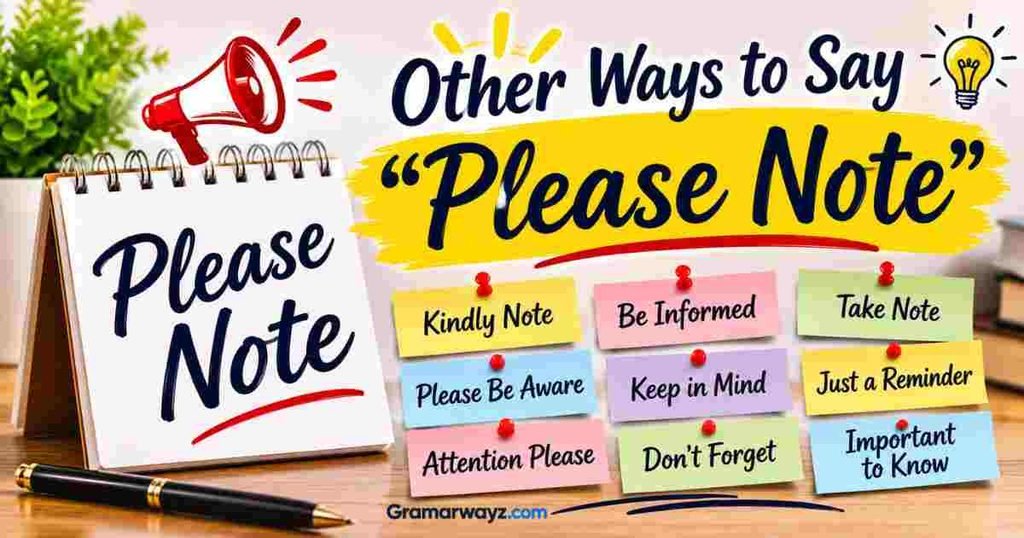

Sometimes, saying “Please Note” can sound too formal or repetitive, especially in professional emails, business messages, announcements, and everyday conversations. Choosing the right alternative can make your writing sound more natural, polite, and effective.
Whether you’re addressing colleagues, sharing important information, giving instructions, or highlighting a key detail, there are many other ways to say “Please Note” that suit different tones and situations.
In this collection, you’ll discover polite alternatives, professional phrases, formal expressions, friendly options, and business-appropriate synonyms you can use in emails, letters, reports, and messages. Explore these useful examples to find the perfect phrase for your audience and writing style.
What Does “Please Note” Mean?
“Please note” is a polite expression used to draw someone’s attention to important information, instructions, reminders, or updates. It tells the reader or listener that something deserves attention or should be remembered. This phrase is commonly used in professional emails, workplace communication, customer service messages, announcements, and everyday conversations.
For example, you might write, “Please note that the office will remain closed on Monday.” It helps communicate important details clearly and respectfully. Depending on the situation, alternatives such as “Kindly note,” “Please be aware,” or “Keep in mind” can make your message sound more natural.
When to Use “Please Note”
You can use “please note” whenever you want someone to pay attention to specific information or remember an important detail. It works well in both formal and semi-formal communication, especially when sharing updates, explaining instructions, or highlighting changes.
Here are some common situations where you can use it:
- Professional Emails: To highlight important details, deadlines, meeting changes, or instructions.
- Workplace Communication: To remind colleagues about schedules, policies, or upcoming tasks.
- Customer Service Messages: To explain service updates, payment details, terms, or important notices.
- Announcements: To draw attention to changes, upcoming events, or public information.
- Everyday Conversations: To remind friends, family members, or others about something important.
Choosing the right alternative depends on your audience and tone. For casual conversations, “Just so you know” or “Heads up” may sound friendlier, while “Please be advised” or “Kindly note” may work better in formal situations.
Is It Professional and Polite to Say “Please Note”?
Yes, “please note” is generally considered both professional and polite. It is a widely accepted expression in business emails, official announcements, workplace messages, and customer communications. It allows you to emphasize important information without sounding overly demanding.
However, the tone can sometimes feel direct or formal, particularly when used repeatedly. If you want your message to sound warmer and more conversational, you can choose alternatives such as “Just a friendly reminder,” “Please keep in mind,” or “I wanted to bring this to your attention.”
For formal communication, phrases like “Kindly note,” “Please be informed,” and “For your information” are also useful. The best choice depends on your audience, purpose, and the level of formality you want to maintain.
The Most Useful Alternatives to “Please Note”
The phrase “Please Note” is commonly used to draw attention to important information, reminders, instructions, or updates. However, using it repeatedly can make your writing sound formal or repetitive. Fortunately, there are several other ways to say “Please Note” that work well in professional emails, business communication, announcements, and everyday conversations. The best alternative depends on your audience and the tone you want to convey. Here are some useful expressions, along with their meanings and examples.
1. Be Advised
“Be Advised” is a formal expression used to inform someone about important information, a change, or a possible consequence. It often sounds more direct and authoritative than “Please Note,” making it suitable for official announcements, workplace policies, and administrative messages.
Examples:
- Be advised that the meeting has been rescheduled for Monday morning.
- Be advised that late submissions will not be accepted after the deadline.
Use this alternative when the information requires attention or awareness. For friendly conversations, a softer expression may sound more natural.
2. Take Note
“Take Note” is a straightforward way to encourage someone to remember or pay attention to particular information. It works in educational settings, presentations, workplace discussions, and everyday communication.
Examples:
- Take note of the new safety guidelines before entering the building.
- Take note that registration closes at the end of this month.
This phrase is useful when you want readers to remember an important detail. Adding a polite word such as “please” can make it sound less like a command.
3. For Your Information
“For Your Information”, often shortened to FYI, is a popular alternative used to share helpful details, updates, or background information. It is common in professional emails, office conversations, and online messages. Unlike some formal alternatives, it does not always suggest that the reader must take action.
Examples:
- For your information, the updated schedule is available on the company website.
- FYI, the client has requested a revised version of the proposal.
Use this expression when sharing information that someone may find useful. It is particularly effective when keeping colleagues or clients informed.
Read More: Other Ways to Say “Stay Tuned”
4. Note Well
“Note Well” is a formal expression that emphasizes the importance of particular information. It tells readers that a specific detail deserves careful attention and should not be overlooked. You may find it in formal instructions, academic writing, official documents, and serious announcements.
Examples:
- Note well that all participants must complete the registration process.
- Note well that the following conditions apply to every applicant.
This alternative is stronger and less conversational than “Please Note.” Choose it when you want to emphasize an important condition or instruction.
5. It Should Be Noted
“It Should Be Noted” is a neutral and formal phrase used to highlight a relevant fact, observation, or important detail. It is especially appropriate for reports, research papers, business documents, presentations, and professional discussions.
Examples:
- It should be noted that the final results may vary depending on the selected method.
- It should be noted that customer feedback played an important role in this decision.
This expression helps introduce information without directly instructing the reader. It is a good choice when presenting facts or adding context to a discussion.
6. Please Be Informed
“Please Be Informed” is a formal and respectful expression used to communicate official updates, decisions, or changes. It is often found in workplace announcements, customer notifications, administrative emails, and formal letters.
Examples:
- Please be informed that our customer support hours have changed.
- Please be informed that your application has been successfully received.
Choose this phrase when communicating information that readers need to know. It sounds more official than casual alternatives such as “Just so you know.”
7. It Should Be Pointed Out
“It Should Be Pointed Out” is used to draw attention to a particular fact, issue, or detail that might otherwise be overlooked. It works well in professional writing, discussions, reports, and explanatory content.
Examples:
- It should be pointed out that the project requires additional approval before moving forward.
- It should be pointed out that these figures represent estimates rather than final results.
This phrase is useful when you want to emphasize a specific observation or clarify something important. It can also introduce a detail that changes how readers understand a situation.
8. Kindly Observe
“Kindly Observe” is a polite but formal expression that asks someone to follow, notice, or pay attention to a particular instruction or requirement. It is commonly suitable for official notices, workplace guidelines, public instructions, and written announcements.
Examples:
- Kindly observe the safety instructions displayed near the entrance.
- Kindly observe the revised working hours during the holiday season.
Use this alternative when asking people to follow a rule or notice a specific detail. For sharing general information, “Kindly Note” may sound more natural.
9. Pay Attention
“Pay Attention” is a direct expression that encourages someone to focus on important information. It is commonly used in classrooms, meetings, presentations, training sessions, and everyday conversations. Depending on the context, it can sound friendly, firm, or instructional.
Examples:
- Pay attention to the updated instructions before starting the assignment.
- Please pay attention to the final section of the presentation.
This phrase works best when you want someone to focus carefully on something. Adding “please” can make the expression more courteous, especially in professional settings.
10. Note That
“Note That” is a concise and practical alternative to “Please Note.” It introduces a specific fact, condition, reminder, or clarification that readers should understand. This expression works well in emails, articles, reports, instructions, and business communication.
Examples:
- Note that the discount applies only to selected products.
- Please note that the online application process takes approximately three business days.
It is a useful choice when you want to communicate important information without adding unnecessary words. The shorter version is direct, while adding “please” creates a more polite tone.
11. Alerting You
“Alerting You” is a conversational expression used to bring someone’s attention to an update, potential issue, or important situation. It is more natural in everyday professional communication than in highly formal documents. It works particularly well when sending quick messages or giving colleagues a timely reminder.
Examples:
- I’m alerting you to a change in tomorrow’s meeting schedule.
- Just alerting you that the payment deadline is approaching.
This phrase is useful when the information may require awareness or a timely response. It sounds more personal and direct than traditional formal alternatives.
12. Important Notice
“Important Notice” is a strong heading or announcement phrase used to highlight information that readers should not overlook. It is commonly used on websites, public announcements, workplace notices, newsletters, and official communications.
Examples:
- Important Notice: The website will be temporarily unavailable for scheduled maintenance.
- Important Notice: All employees must submit their updated contact details by Friday.
This expression is especially effective when presenting essential updates or instructions. Use it as a heading when you want the information to stand out clearly.
See Also: Other Ways To Say “Progress In Business”
13. Please Take Note
“Please Take Note” is a polite and slightly more direct alternative to “Please Note.” It encourages readers to pay attention to something important and remember it for future reference. This phrase is suitable for emails, classroom instructions, business messages, and official reminders.
Examples:
- Please take note of the revised timetable for next week’s classes.
- Please take note that the office will open later during the holiday period.
This expression is useful when you want to emphasize a reminder without sounding overly strict. It works particularly well when readers are expected to remember a specific detail.
14. Mind You
“Mind You” is an informal expression used to introduce an additional point, clarification, or contrasting detail. It is more conversational than “Please Note” and is commonly used in spoken English, casual writing, and friendly discussions.
Examples:
- The journey was quite expensive. Mind you, the experience was worth every penny.
- She has a busy schedule. Mind you, she always makes time for her family.
Unlike formal alternatives, “Mind You” does not simply ask someone to notice information. It often adds emphasis or introduces a qualifying thought. Use it in casual conversations rather than official emails or business notices.
15. Kindly Note
“Kindly Note” is a polite and professional alternative to “Please Note.” It asks readers to pay attention to specific information without sounding too demanding. This phrase is particularly useful in formal emails, workplace announcements, customer service messages, and official instructions.
Examples:
- Kindly note that the office will remain closed on Friday due to maintenance.
- Kindly note that all applications must be submitted before the deadline.
This expression works best when sharing important details politely. It is especially common in business communication and formal written notices.
16. For The Attention Of
“For The Attention Of” is a formal expression used to direct information or a message toward a particular person or department. It is commonly found in business letters, official emails, documents, and workplace communication.
Examples:
- For the attention of all employees, the updated holiday schedule is now available.
- This announcement is for the attention of department managers.
This expression is particularly useful when addressing a specific audience. It is more appropriate as a heading or introductory phrase than as a direct replacement in ordinary sentences.
17. Make Notice Of
“Make Notice Of” is an expression intended to encourage someone to recognize or acknowledge particular information. However, it is not a natural or commonly accepted alternative in standard English. Depending on your meaning, “Take Notice Of” or “Make a Note Of” is usually a better choice.
Examples:
- Please take notice of the updated safety requirements.
- Make a note of the new meeting date in your calendar.
Use “Take Notice Of” when asking someone to pay attention and “Make a Note Of” when asking them to remember or record information.
18. Heads Up
“Heads Up” is a friendly and informal alternative to “Please Note.” It is commonly used to give someone advance information about a change, reminder, or possible issue. You will often see it in workplace chats, text messages, and casual emails.
Examples:
- Heads up! The team meeting has been moved to Thursday.
- Just a heads-up that the application deadline is tomorrow.
This expression is ideal for friendly communication with colleagues, friends, and familiar audiences. Avoid it in highly formal letters or official documents.
19. Just So You Know
“Just So You Know” is a natural, conversational expression used to share information that someone may find helpful. It is less formal than “Please Note” and works well in everyday conversations, friendly emails, and workplace messages.
Examples:
- Just so you know, the office will close early this afternoon.
- Just so you know, I have already sent the updated document to the manager.
Use this phrase when sharing a quick update without sounding too serious or demanding. It helps make your message feel personal and approachable.
Explore: Other Ways to Say “Night Time”
20. Observe That
“Observe That” is a formal expression used to direct attention toward a particular fact, pattern, or detail. It is more common in academic writing, analytical discussions, and explanatory content than in casual conversation.
Examples:
- Observe that the final figures are different from the original estimates.
- Please observe that each section follows a specific format.
This phrase works when asking readers to examine or recognize something carefully. For everyday professional emails, “Note That” is usually a more natural choice.
21. Keep In Mind
“Keep In Mind” is a friendly and practical alternative to “Please Note” when you want someone to remember an important detail or consider something before making a decision. It is widely used in conversations, instructions, articles, and professional messages.
Examples:
- Keep in mind that the registration process may take several business days.
- Please keep in mind that all employees must follow the updated guidelines.
This expression is particularly useful for sharing reminders, advice, and important considerations. It sounds less formal while still communicating that the information matters.
22. Take Heed
“Take Heed” is a strong expression used to encourage someone to pay careful attention to advice, warnings, or important instructions. It has a more serious tone than “Please Note” and is often found in formal writing, warnings, and cautionary statements.
Examples:
- Take heed of the safety instructions before operating the equipment.
- Employees should take heed of the updated security guidelines.
Use this phrase when the information deserves serious consideration. It may sound too strong for ordinary updates or friendly conversations.
23. Reminder
“Reminder” is a simple and effective alternative when you want to bring previously shared information back to someone’s attention. It is commonly used in emails, workplace announcements, text messages, newsletters, and everyday communication.
Examples:
- Reminder: All project reports must be submitted by Friday.
- Just a reminder that tomorrow’s meeting will begin at 10 AM.
This expression is ideal for deadlines, appointments, scheduled events, and repeated instructions. It is concise, clear, and easy for readers to understand.
24. Nota Bene
“Nota Bene” is a Latin expression meaning “note well” or “pay particular attention.” It is sometimes abbreviated as N.B. and appears in academic writing, formal documents, literary texts, and explanatory notes.
Examples:
- Nota bene: The final chapter contains additional instructions for completing the application.
- N.B. All references must follow the required citation format.
This alternative is suitable when you want to emphasize a specific detail in formal or academic writing. However, because it is less familiar to everyday readers, simple expressions such as “Please Note” may be clearer.
25. Important Information Alert
“Important Information Alert” is an attention-grabbing expression used to introduce essential updates, announcements, or changes. It is particularly useful for website notifications, newsletters, public announcements, and workplace communications.
Examples:
- Important Information Alert: Our customer support service will be unavailable this Sunday.
- Important Information Alert: The application deadline has been extended until December 15.
Use this phrase when the information is time-sensitive or especially important. It works best as a heading or notification title rather than within an ordinary sentence.
Learn More: Other Ways to Say “In My Opinion”
26. Kindly Be Aware
“Kindly Be Aware” is a polite and formal expression used to make someone conscious of an important detail, condition, or possible change. It is suitable for professional emails, customer notifications, official announcements, and administrative communication.
Examples:
- Kindly be aware that the office will operate on reduced hours during the holidays.
- Kindly be aware of the updated payment requirements before submitting your application.
This phrase is useful when sharing information that readers should understand before taking action. It maintains a respectful tone while emphasizing the importance of the message.
27. Please Acknowledge This Point
“Please Acknowledge This Point” is a direct and professional expression used when you want someone to recognize or confirm that they have understood a particular detail. It is useful in workplace discussions, formal correspondence, instructions, and business communication.
Examples:
- Please acknowledge this point before proceeding with the next stage of the project.
- Please acknowledge this point when reviewing the revised company policy.
Choose this expression when simply sharing information is not enough and you need confirmation from the reader. It is stronger than “Please Note” because it suggests an expected response.
28. Attention Required Notice
“Attention Required Notice” is a formal, notification-style expression used to indicate that a message needs immediate attention. It is commonly suitable for website alerts, system notifications, administrative updates, and workplace announcements.
Examples:
- Attention Required Notice: All employees must update their account information by Monday.
- Attention Required Notice: Please review the revised security policy before accessing the system.
This phrase works best as a heading or alert title. Use it when readers need to review information or complete an important task rather than for routine announcements.
29. Highlighting Key Information
“Highlighting Key Information” is a professional expression used to introduce the most important details in a document, presentation, report, or announcement. It helps readers focus on essential points without making the message sound overly demanding.
Examples:
- I am highlighting key information about the upcoming changes to our services.
- This section highlights key information regarding the application process.
Use this expression when summarizing important details or drawing attention to specific points. It is particularly effective in business reports, presentations, and explanatory writing.
30. Draw Attention To
“Draw Attention To” is a useful alternative to “Please Note” when you want readers to focus on a particular fact, issue, or detail. It is commonly used in professional writing, presentations, reports, and business communication.
Examples:
- I would like to draw attention to the changes in our company policy.
- This report draws attention to several important customer concerns.
Use this phrase when highlighting something that deserves closer consideration. It works especially well when discussing specific details or raising an important issue.
31. Formal Communication Note
“Formal Communication Note” describes a written statement used to bring important information to someone’s attention in a professional or official setting. It is more of a descriptive heading than a direct conversational replacement for “Please Note.” It works well in business documents, formal announcements, and workplace notices.
Examples:
- Formal Communication Note: All department heads must review the updated company guidelines.
- Please refer to the formal communication note regarding the revised office schedule.
Use this expression when presenting official information that requires a professional tone. It is particularly suitable for headings and administrative messages.
32. Critical Update Statement
“Critical Update Statement” is a descriptive phrase used to introduce an important change, urgent announcement, or significant development. It is suitable for business updates, technical notifications, project announcements, and official communications.
Examples:
- Critical Update Statement: The scheduled system maintenance will begin at 8 PM tonight.
- This critical update statement explains the changes to our customer service policy.
Choose this expression when the information is especially important or time-sensitive. It works better as a notification heading than as a direct replacement in everyday sentences.
33. Professional Advisory Phrase
“Professional Advisory Phrase” describes language used to communicate guidance, recommendations, or important information in a respectful business tone. It is relevant to workplace communication, official emails, reports, and professional instructions.
Examples:
- Please be advised that the revised guidelines will take effect next month.
- We recommend reviewing the professional advisory regarding the new payment process.
This phrase is more of a category description than a natural alternative to “Please Note.” For actual communication, expressions such as “Please Be Advised” sound more appropriate.
34. Instructional Notice Marker
“Instructional Notice Marker” refers to a phrase or heading that introduces specific directions, requirements, or procedures. It helps readers recognize that the following information contains instructions they should understand or follow.
Examples:
- Instructional Notice: All visitors must register at the reception desk before entering.
- Please follow the instructions provided in the notice before submitting your application.
This expression is useful for manuals, workplace guidelines, educational materials, and official instructions. It works best as a descriptive heading rather than a conversational synonym.
35. Essential Information Signal
“Essential Information Signal” describes a heading or communication cue that indicates particularly important details are being shared. It can be useful in reports, presentations, digital notifications, and public announcements.
Examples:
- Essential Information: The registration deadline has been extended until Friday.
- This section highlights essential information about the new application requirements.
Use this type of expression when you want readers to recognize important details quickly. For natural business communication, “Important Information” is a simpler and more familiar choice.
See More: Other Ways to Say “after careful consideration”
36. Business Communication Alert
“Business Communication Alert” is a descriptive phrase used to introduce an important workplace announcement, company update, or business-related notification. It helps employees, customers, or business partners identify information that deserves attention.
Examples:
- Business Communication Alert: The company will introduce a new attendance policy next month.
- Please review the business communication alert regarding the upcoming office relocation.
This expression is particularly useful as a heading in corporate emails, newsletters, and internal announcements. For a more natural sentence, you can use “Please Be Informed” or “Important Update.”
37. Please Be Aware
“Please Be Aware” is a polite and professional alternative to “Please Note.” It is used to make readers conscious of an important fact, possible change, requirement, or situation. It works well in business emails, customer notifications, announcements, and everyday professional communication.
Examples:
- Please be aware that the office will remain closed during the public holiday.
- Please be aware of the updated security requirements before accessing your account.
This expression is helpful when readers need to understand a situation before taking action. It sounds respectful while clearly communicating that the information matters.
38. It Is Important to Remember
“It Is Important to Remember” is a useful expression for emphasizing information that readers should keep in mind. It is commonly used in educational content, professional instructions, presentations, articles, and explanatory writing.
Examples:
- It is important to remember that all applications must include the required documents.
- It is important to remember that regular practice helps improve communication skills.
Use this phrase when sharing advice, explaining requirements, or emphasizing a fact that may affect someone’s decisions. It is more explanatory than “Please Note” and works naturally in longer passages.
39. One Important Thing to Remember
“One Important Thing to Remember” is a friendly and straightforward expression used to introduce a key point. It is suitable for blog posts, tutorials, presentations, educational materials, and informal professional communication.
Examples:
- One important thing to remember is that your password should never be shared with anyone.
- One important thing to remember is to check the deadline before submitting your application.
This phrase works especially well when explaining a process or offering practical advice. It helps readers identify a key takeaway without making the message sound overly formal.
40. Please Remember
“Please Remember” is a polite and direct alternative to “Please Note” when you want someone to keep specific information in mind. It is commonly used in reminders, workplace emails, instructions, announcements, and personal messages.
Examples:
- Please remember to bring your identification card to the meeting.
- Please remember that the office closes at 5 PM on weekdays.
Choose this expression when the reader needs to recall a detail or complete a particular task. It sounds natural, simple, and respectful in both professional and everyday communication.
41. A Point Worth Mentioning
“A Point Worth Mentioning” is a natural expression used to introduce an additional fact, observation, or detail that deserves attention. It is particularly useful in discussions, presentations, reports, articles, and professional conversations.
Examples:
- A point worth mentioning is that the new software is compatible with older devices.
- One point worth mentioning is that customer feedback influenced the final decision.
This phrase is useful when adding relevant information to an existing discussion. It sounds conversational and helps introduce details without interrupting the natural flow of your writing.
42. I Would Like to Highlight
“I Would Like to Highlight” is a professional expression used to draw attention to a particular fact, achievement, concern, or important detail. It works well in business presentations, formal emails, reports, meetings, and workplace discussions.
Examples:
- I would like to highlight the progress our team has made during the past month.
- I would like to highlight an important change in the updated company policy.
Use this phrase when you want to emphasize something specific while maintaining a respectful tone. It is particularly effective when introducing information that supports your main message.
43. It Is Worth Noting
“It Is Worth Noting” is a polished and neutral alternative to “Please Note.” It introduces a relevant fact, observation, or detail that readers may otherwise overlook. This expression is common in academic writing, professional reports, articles, and business communication.
Examples:
- It is worth noting that the company received more applications this year than last year.
- It is worth noting that the final price includes all applicable service charges.
This phrase is useful when presenting supporting information or adding context to an explanation. It sounds professional without being unnecessarily formal or demanding.
44. Let Me Emphasize
“Let Me Emphasize” is a direct expression used when you want to stress the importance of a particular statement or idea. It is commonly used in presentations, meetings, speeches, professional discussions, and persuasive writing.
Examples:
- Let me emphasize that customer satisfaction remains our highest priority.
- Let me emphasize the importance of following all safety procedures.
Choose this phrase when a detail deserves extra attention or when you want to reinforce an important message. It carries more emphasis than a simple “Please Note.”
45. Keep This in Consideration
“Keep This in Consideration” is an expression used to encourage someone to think about a particular fact, condition, or possibility before making a decision. It is suitable for professional advice, discussions, planning, and explanatory writing.
Examples:
- Keep this in consideration when choosing the most suitable payment plan.
- Please keep this in consideration before finalizing the project budget.
A more natural and widely accepted version is “Keep This in Mind.” Both expressions communicate the idea of remembering relevant information, but the shorter version is generally better for everyday English.
46. Be Mindful Of
“Be Mindful Of” is a thoughtful and polite expression used to remind someone to consider a particular situation, responsibility, or possible consequence. It works well in workplace communication, educational writing, professional advice, and everyday conversations.
Examples:
- Be mindful of the submission deadline when preparing your application.
- Please be mindful of other people’s schedules when arranging meetings.
Use this phrase when encouraging awareness and consideration rather than simply sharing a fact. It is especially useful for reminders involving time, behavior, responsibilities, or professional etiquette.
Read Way: Other Ways to Say “I Have a Proposition” (Formal & Casual)
47. I Would Like to Bring to Your Attention
“I Would Like to Bring to Your Attention” is a formal and respectful expression used to highlight something important that requires someone’s awareness. It is commonly found in business emails, official letters, workplace communication, and administrative discussions.
Examples:
- I would like to bring to your attention an issue with the latest project report.
- I would like to bring to your attention that the payment deadline is approaching.
This phrase is useful when communicating concerns, changes, or important observations to colleagues, managers, or clients. It sounds professional and gives your message a clear purpose.
48. Please Pay Special Attention
“Please Pay Special Attention” is a polite but direct expression used when a particular detail requires more focus than the surrounding information. It is useful in instructions, training materials, presentations, academic communication, and workplace announcements.
Examples:
- Please pay special attention to the revised safety guidelines.
- Please pay special attention to the final section of the application form.
Choose this expression when readers must carefully review something to avoid mistakes or misunderstandings. It communicates greater urgency than the general phrase “Please Note.”
49. Worth Keeping in Mind
“Worth Keeping in Mind” is a natural and conversational expression used to introduce information that someone should remember or consider. It is suitable for blog articles, advice, professional discussions, presentations, and everyday writing.
Examples:
- It is worth keeping in mind that delivery times may vary depending on your location.
- One detail worth keeping in mind is that the offer expires at the end of the month.
This phrase works well when sharing useful advice or mentioning an important consideration. It sounds friendly and informative without making the reader feel pressured.
50. Just a Friendly Reminder
“Just a Friendly Reminder” is a warm and polite alternative to “Please Note” when sharing information that someone may have forgotten. It is commonly used in workplace emails, personal messages, group chats, event announcements, and customer communication.
Examples:
- Just a friendly reminder that our team meeting starts at 9 AM tomorrow.
- Just a friendly reminder to submit your completed forms before Friday.
This expression is ideal for gentle reminders about deadlines, appointments, meetings, and pending tasks. It keeps your message approachable while making sure important information receives attention.
Pros and Cons of Using “Please Note”
The phrase “Please Note” is a common way to highlight important information in emails, business documents, announcements, and everyday communication. It is polite, simple, and widely understood. However, using it too frequently can make writing sound repetitive or overly formal. Understanding its advantages and disadvantages can help you decide when to use it and when another expression might work better.
| Pros | Cons |
| Clear Communication: Directs readers toward important information. | Repetitive: Frequent use can make writing sound monotonous. |
| Professional Tone: Works well in business emails and official messages. | Overly Formal: May sound stiff in casual conversations. |
| Easy to Understand: Most readers recognize its meaning immediately. | Limited Expression: Does not always communicate urgency or importance effectively. |
| Polite Language: Highlights details without sounding too demanding. | Less Personal: Can make messages feel impersonal when overused. |
| Versatile Usage: Suitable for notices, instructions, reports, and reminders. | Weak Emphasis: May not create enough urgency for critical updates. |
| Concise Wording: Communicates a message without lengthy explanations. | Predictable: Repeated use can make professional writing less engaging. |
Choosing an alternative such as “Kindly Note,” “Please Be Aware,” “For Your Information,” or “Keep in Mind” can make your writing more natural and appropriate for different audiences.
Frequently Asked Questions
1. What are the best alternatives to “Please Note”?
Some of the best alternatives include “Kindly Note,” “Please Be Aware,” “For Your Information,” “Take Note,” “Keep in Mind,” “Be Advised,” and “It Is Worth Noting.” Each expression suits a different situation, depending on whether you want to sound formal, friendly, or professional.
2. What is a more professional way to say “Please Note”?
You can use “Please Be Advised,” “Kindly Note,” “Please Be Informed,” or “I Would Like to Bring to Your Attention.” These expressions are suitable for business emails, workplace announcements, official letters, and professional communication.
3. What is a polite way to say “Please Note”?
“Kindly Note,” “Please Be Aware,” “Please Keep in Mind,” and “Just a Friendly Reminder” are polite alternatives. They help communicate important information while maintaining a respectful and considerate tone.
4. How can I say “Please Note” in an email?
You can replace “Please Note” with expressions such as “For Your Information,” “Kindly Be Aware,” “Please Take Note,” or “I Would Like to Highlight.” Choose an expression that matches your email’s purpose and relationship with the recipient.
5. Is “Kindly Note” better than “Please Note”?
Both expressions are correct and widely understood. “Kindly Note” can sound slightly more formal and traditional, while “Please Note” is more neutral and commonly used. Either option works well in professional communication.
6. Is “Please Note” formal or informal?
“Please Note” is generally considered a neutral-to-formal expression. It is commonly used in professional emails, official announcements, business documents, instructions, and notices. It may sound slightly formal in casual conversations with friends.
7. What is a shorter way to say “Please Note”?
Short alternatives include “Note,” “FYI,” “Reminder,” “Heads Up,” and “Important.” These expressions work well when you want to communicate information quickly without adding unnecessary words.
8. What is another way to say “Please Note” without sounding rude?
Try using “Just so you know,” “Please Keep in Mind,” “Kindly Be Aware,” or “For Your Information.” These expressions sound considerate and help you share important details without appearing too demanding.
9. Can I use “For Your Information” instead of “Please Note”?
Yes, you can use “For Your Information” when sharing useful details or updates. However, the two expressions have slightly different purposes. “Please Note” draws attention to something important, while “For Your Information” generally shares information that someone may find helpful.
10. What does “Please Note” mean in professional communication?
In professional communication, “Please Note” means that the reader should pay attention to or remember a particular detail. It is commonly used before important instructions, deadlines, policy changes, reminders, and announcements.
11. Is “Please Be Advised” the same as “Please Note”?
They have similar meanings, but their tones are slightly different. “Please Note” is a general way to highlight information, whereas “Please Be Advised” sounds more formal and authoritative. The latter is often used for official updates, warnings, and policy notifications.
12. What can I say instead of “Please Note” in a friendly message?
For friendly messages, you can use “Just a Heads Up,” “Just So You Know,” “Please Remember,” or “Just a Friendly Reminder.” These alternatives sound natural and approachable in everyday conversations and informal emails.
13. Should I avoid using “Please Note” repeatedly?
Yes, it is better to avoid repeating the same expression throughout a document or email. Although “Please Note” is useful, using different alternatives can improve readability, make your writing more engaging, and help you communicate with the right tone.
14. What is the difference between “Please Note” and “Keep in Mind”?
“Please Note” directs attention toward specific information, while “Keep in Mind” encourages someone to remember or consider something. Both are useful, but “Keep in Mind” often sounds more conversational and natural.
15. When should I use alternatives to “Please Note”?
Use alternatives when writing professional emails, business announcements, reports, instructions, reminders, presentations, or casual messages. Choose formal expressions for official communication and friendly phrases for everyday conversations to make your message clear and appropriate.
Conclusion
Knowing other ways to say “Please Note” can make your writing clearer, more natural, and less repetitive. Whether you’re preparing professional emails, business announcements, formal letters, or friendly reminders, choosing the right expression helps you communicate effectively.
From polite alternatives like “Kindly Note” to conversational phrases such as “Just So You Know” and “Heads Up,” there are plenty of options for different situations. Consider your audience, message, and desired tone before choosing a phrase. Explore these alternatives and use the ones that make your communication more engaging, respectful, and easy to understand.

I am the admin of Gramarwayz.com. I create and curate helpful synonyms, alternative words, and other ways to say common words and phrases to help readers improve their vocabulary and writing skills.