
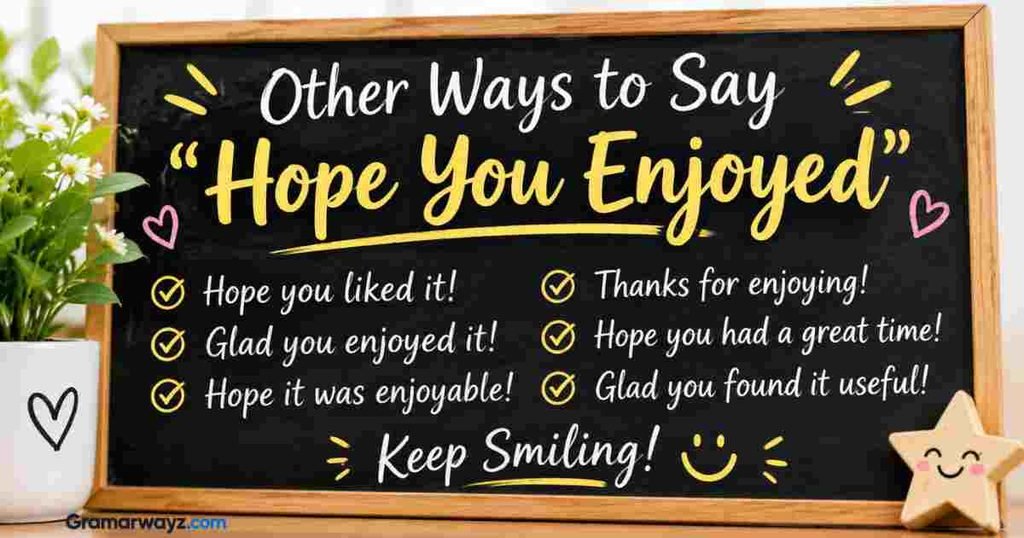

Finding the right words to express appreciation after an experience can make your message feel more natural and thoughtful. If you often say “Hope You Enjoyed” and want to avoid repeating the same phrase, exploring different alternatives can help you communicate with greater warmth and variety.
Whether you are following up after an event, sharing a presentation, sending an email, or checking in after a meeting, the right expression can leave a positive impression. This collection of other ways to say “Hope You Enjoyed” includes friendly, professional, polite, and casual alternatives for different situations.
Keep reading to discover useful phrases, understand when to use them, and find examples for everyday and professional conversations.
What Does “I Hope You Enjoyed” Mean?
The phrase “I hope you enjoyed” is a polite and friendly expression used to show that you want someone to have had a positive experience. It communicates kindness, appreciation, and interest in another person’s feelings. People commonly use it after sharing something, such as an event, presentation, meal, meeting, trip, or special activity.
For example, after hosting a dinner, you might say, “I hope you enjoyed the evening.” Similarly, after sending a presentation or completing a meeting, you can use this phrase to check whether the other person found the experience valuable. It works in both casual and professional conversations.
When to Use “I Hope You Enjoyed”
You can use “I hope you enjoyed” in different situations when you want to acknowledge someone’s experience or follow up in a thoughtful way. It is especially useful when communicating with friends, family members, colleagues, customers, or business clients.
Here are some common situations where this phrase fits naturally:
- After an event: Use it to ask whether someone had a good time at a celebration, party, or gathering.
- After a meeting: Show interest in whether the discussion was helpful and productive.
- After sharing a presentation: Ask whether your audience found the information useful.
- After a meal: Express hope that guests liked the food and dining experience.
- After a trip: Ask someone whether they had a pleasant and memorable journey.
- In professional emails: Add a friendly touch when following up with clients or colleagues.
- After a training session: Check whether participants found the session informative.
- After sharing content: Ask readers or viewers whether they liked an article, video, or other resource.
Why We Need to Use This Phrase
Using “I hope you enjoyed” helps create positive communication and shows that you care about another person’s experience. It makes conversations feel more personal, respectful, and engaging. Rather than simply ending a conversation, this expression gives the other person an opportunity to share their thoughts and feedback.
Here are some important reasons to use this phrase:
- Shows Appreciation: It communicates that you value someone’s time and participation.
- Creates a Positive Impression: It leaves conversations on a friendly and welcoming note.
- Encourages Feedback: It gives people an opportunity to share their opinions and experiences.
- Builds Relationships: It helps strengthen personal and professional connections.
- Sounds Polite: It adds courtesy to emails, messages, and everyday conversations.
- Shows Interest: It demonstrates that you care about how someone feels.
- Improves Communication: It encourages meaningful conversations and responses.
- Expresses Thoughtfulness: It makes your message sound more considerate and genuine.
Pros and Cons of “I Hope You Enjoyed”
The phrase “I hope you enjoyed” is useful in many personal and professional situations. However, using the same expression repeatedly can sometimes make your communication sound predictable. Understanding its advantages and disadvantages can help you decide when to use it or choose a suitable alternative.
| Pros | Cons |
| Sounds polite and friendly. | Can become repetitive when overused. |
| Works in personal and professional conversations. | May sound generic in formal emails. |
| Shows interest in someone’s experience. | Does not always encourage detailed feedback. |
| Creates a positive impression. | Can feel less personal without context. |
| Easy to understand and use. | May not suit every professional situation. |
| Helps maintain positive relationships. | Sometimes lacks warmth or originality. |
Overall: “I hope you enjoyed” is a simple, thoughtful, and versatile expression. However, using alternatives such as “I trust you had a wonderful time,” “I hope you found it helpful,” or “I hope it was a pleasant experience” can make your communication sound more natural, engaging, and appropriate for different situations.
The Most Useful Alternatives to “Hope You Enjoyed”
Finding different ways to say “Hope You Enjoyed” can make your conversations, emails, and messages sound more natural and engaging. Whether you are following up after an event, sharing something special, or communicating with a client, choosing the right expression helps you leave a positive impression. Here are some useful alternatives, along with their meanings and examples, to help you choose the right phrase for different situations.
1. Hope You Loved It
“Hope you loved it” is a cheerful and casual way to express that you want someone to enjoy something you shared or arranged. It works particularly well when talking about gifts, surprises, entertainment, meals, or personal recommendations. This alternative sounds enthusiastic and adds a little more excitement to your message.
Examples:
- “I picked this gift especially for you. Hope you loved it!”
- “I finally shared the video with you. Hope you loved it.”
Use this phrase when communicating with friends, family, or people you know well. It is less formal than “I hope you enjoyed,” making it suitable for friendly texts and social media messages.
2. I Hope You Enjoyed Every Moment
“I hope you enjoyed every moment” expresses a wish that someone appreciated the entire experience rather than just one part of it. It is a thoughtful alternative for special occasions, vacations, celebrations, and memorable activities. The phrase adds warmth and makes your message sound more personal.
Examples:
- “Your wedding celebration looked beautiful. I hope you enjoyed every moment.”
- “Thank you for attending the weekend retreat. I hope you enjoyed every moment.”
This expression is particularly appropriate for meaningful experiences that deserve special attention. It also works well when sending follow-up messages after an important occasion.
3. Hope It Was a Wonderful Experience
“Hope it was a wonderful experience” is a polite and positive expression that communicates your wish for someone to have had an enjoyable time. It is suitable for professional emails, customer communication, travel experiences, workshops, and special events. Compared with casual alternatives, this phrase sounds slightly more polished and thoughtful.
Examples:
- “Thank you for visiting our office. Hope it was a wonderful experience.”
- “I heard you attended the conference last week. Hope it was a wonderful experience.”
Use this expression when you want to sound respectful while maintaining a friendly tone. It is especially helpful when communicating with colleagues, customers, or people you do not know very well.
Read More: Other Ways to Say ““Please Be Advised”
4. I Hope You Had Fun
“I hope you had fun” is a simple, relaxed, and friendly alternative to “Hope You Enjoyed.” It shows that you want someone to have had an enjoyable experience without making the conversation sound too formal. You can use it after parties, outings, games, family activities, or informal gatherings.
Examples:
- “Thanks for coming to the birthday party. I hope you had fun.”
- “You looked like you enjoyed the concert. I hope you had fun!”
This phrase is ideal for everyday conversations because it feels natural and easygoing. It works particularly well with friends, children, family members, and familiar colleagues.
5. Hope You Found It Enjoyable
“Hope you found it enjoyable” is a polite alternative that focuses on how someone personally experienced an activity, event, or piece of content. It is useful when you want to sound considerate without being overly enthusiastic. You can use it in professional emails, feedback requests, presentations, training sessions, and shared experiences.
Examples:
- “Thank you for attending the workshop. Hope you found it enjoyable.”
- “I have attached the recording of our session. Hope you found it enjoyable.”
This expression is suitable for workplace communication and formal follow-ups. It also allows you to acknowledge someone’s experience in a respectful and professional manner.
6. I Hope It Made You Happy
“I hope it made you happy” is a heartfelt expression that communicates your desire to bring happiness to someone through an experience, gift, message, or thoughtful gesture. It sounds more emotional and personal than a standard alternative to “Hope You Enjoyed.” Use it when the other person’s feelings matter more than simply having a good time.
Examples:
- “I wanted to make your birthday special. I hope it made you happy.”
- “I wrote this little note just for you. I hope it made you happy.”
This phrase works particularly well in personal messages, romantic conversations, and thoughtful exchanges. It shows that you care about the emotional impact of what you have shared.
7. Hope You Had a Pleasant Experience
“Hope you had a pleasant experience” is a courteous and professional expression used to show interest in someone’s overall experience. It is especially useful in customer service, business communication, hotel stays, appointments, and professional events. The wording is respectful and suitable when communicating with customers or people you do not know personally.
Examples:
- “Thank you for choosing our services. Hope you had a pleasant experience.”
- “We appreciate your visit to our office. Hope you had a pleasant experience.”
Choose this alternative when you want to maintain a professional tone while expressing genuine consideration. It is also appropriate for customer follow-up emails and service-related messages.
8. I Hope You Really Liked It
“I hope you really liked it” is an enthusiastic and conversational way to express that you want someone to appreciate something you have shared. It works well for gifts, recommendations, creative projects, meals, movies, and personal surprises. The word “really” adds emphasis and makes the expression sound more enthusiastic.
Examples:
- “I chose this book because I thought you would enjoy it. I hope you really liked it.”
- “We worked hard on the presentation. I hope you really liked it.”
This phrase is best for friendly and informal situations. It communicates excitement while inviting the other person to share their opinion about the experience.
9. Hope You Had an Amazing Time
“Hope you had an amazing time” is an energetic and positive expression that communicates your wish for someone to have enjoyed an experience. It is particularly suitable for exciting occasions such as vacations, concerts, birthday celebrations, festivals, and special outings.
Examples:
- “Have a safe trip back home! Hope you had an amazing time.”
- “The festival looked incredible. Hope you had an amazing time there.”
This alternative adds enthusiasm to your message and sounds more expressive than a simple “Hope You Enjoyed.” Use it when you want to celebrate someone’s experience and share in their excitement.
10. I Hope It Brought You Joy
“I hope it brought you joy” is a warm and meaningful alternative that focuses on happiness and emotional satisfaction. It is often used when sharing something thoughtful, such as a gift, heartfelt message, creative work, or memorable experience. This expression feels more personal than ordinary conversational phrases.
Examples:
- “I made this handmade card with love. I hope it brought you joy.”
- “Sharing these memories meant a lot to me. I hope it brought you joy.”
Use this phrase when you want your words to sound sincere and compassionate. It is particularly suitable for personal notes, appreciation messages, and meaningful conversations with loved ones.
11. Hope You Enjoyed the Experience
“Hope you enjoyed the experience” is a straightforward and versatile alternative that works in both casual and professional communication. It refers to the overall activity or event someone participated in, making it useful after workshops, trips, events, presentations, and business interactions.
Examples:
- “Thank you for participating in our online session. Hope you enjoyed the experience.”
- “It was great having you on the tour. Hope you enjoyed the experience.”
This phrase is a good choice when you want to acknowledge someone’s participation without sounding overly emotional. It also works well in follow-up emails where a clear and polite tone is important.
12. I Trust You Had a Good Time
“I trust you had a good time” is a slightly formal and confident way to express your expectation that someone enjoyed an event or activity. It is commonly suitable for business correspondence, professional follow-ups, formal invitations, and conversations with clients or colleagues.
Examples:
- “Thank you for attending the annual dinner. I trust you had a good time.”
- “It was a pleasure welcoming you to our conference. I trust you had a good time.”
The word “trust” gives the expression a more polished tone than casual alternatives. However, it can sound somewhat formal in friendly conversations, so choose it when the situation calls for professional courtesy.
13. Hope It Was Worth Your Time
“Hope it was worth your time” is a considerate expression that focuses on whether someone found an activity useful, valuable, or rewarding. It is particularly appropriate after presentations, meetings, webinars, training sessions, courses, and informative events.
Examples:
- “Thank you for attending my presentation. Hope it was worth your time.”
- “I appreciate you joining the webinar today. Hope it was worth your time.”
This alternative is useful when you want to acknowledge that someone invested their time in an activity. It also communicates that you value their participation and want them to feel satisfied with the experience.
See Also: Best Ways to Say “Best practice”
14. I Hope You Found It Memorable
“I hope you found it memorable” is a thoughtful alternative that expresses your wish for someone to remember an experience positively. It works especially well for weddings, celebrations, special trips, important events, and meaningful occasions. The phrase places emphasis on lasting impressions rather than simple enjoyment.
Examples:
- “We were delighted to celebrate this special day with you. I hope you found it memorable.”
- “Thank you for joining our annual gathering. I hope you found it memorable.”
Use this expression when an experience is meaningful or significant and you want to acknowledge its lasting value. It is suitable for both personal messages and polished professional communication.
15. I Hope You Had a Great Time
“I hope you had a great time” is a warm and friendly alternative to “Hope You Enjoyed.” It expresses that you want someone to have had a positive and memorable experience. You can use it after a party, celebration, trip, meeting, or social gathering. This phrase works well in both personal conversations and informal professional messages.
Examples:
- “Thank you for joining us last night. I hope you had a great time.”
- “It was lovely having you at the event. I hope you had a great time.”
This expression is especially useful when you want to show hospitality and make someone feel appreciated. It sounds genuine without being overly formal.
16. Hope You Had a Lovely Time
“Hope you had a lovely time” is a warm and friendly alternative to “Hope You Enjoyed.” It expresses your wish that someone experienced happiness and enjoyment during an event or activity. This phrase is especially suitable for dinner parties, family gatherings, celebrations, and social occasions.
Examples:
- “Thank you for joining us last evening. Hope you had a lovely time.”
- “It was wonderful having you at the birthday party. Hope you had a lovely time.”
Use this expression when you want to sound welcoming and thoughtful. It works naturally in personal conversations, text messages, and friendly follow-ups.
17. I Hope You Appreciated It
“I hope you appreciated it” is a considerate expression used when you want someone to recognize the value, effort, or thought behind something. It is suitable for gifts, helpful gestures, presentations, and meaningful experiences.
Examples:
- “I spent several hours preparing this presentation. I hope you appreciated it.”
- “We arranged a special surprise for your visit. I hope you appreciated it.”
This phrase focuses on recognition and gratitude rather than entertainment. Use it when you want to know whether someone valued your effort or gesture. Keep in mind that it can sound slightly direct, depending on your relationship with the recipient.
18. Hope You Had a Fantastic Experience
“Hope you had a fantastic experience” is an enthusiastic alternative that expresses your wish for someone to have enjoyed an activity or event. It is particularly useful after vacations, concerts, business events, workshops, and special outings.
Examples:
- “Thank you for booking with us. Hope you had a fantastic experience.”
- “I heard you visited the new resort. Hope you had a fantastic experience.”
This expression adds excitement to your message while showing genuine interest in someone’s satisfaction. It works well in both casual conversations and professional customer follow-ups.
19. I Hope It Met Your Expectations
“I hope it met your expectations” is a professional and considerate expression used to check whether something matched what someone expected. It is commonly used after delivering a service, completing a project, organizing an event, or sharing a presentation.
Examples:
- “We have completed the website redesign. I hope it met your expectations.”
- “Thank you for choosing our services. I hope it met your expectations.”
This alternative is particularly useful in business emails, customer service messages, and workplace communication. It shows that you value someone’s opinion and are willing to receive feedback about their experience.
20. Hope You Enjoyed Every Second
“Hope you enjoyed every second” is an expressive and cheerful way to say that you want someone to have enjoyed an experience from beginning to end. It is especially suitable for memorable celebrations, holidays, concerts, parties, and exciting activities.
Examples:
- “Your birthday celebration looked amazing. Hope you enjoyed every second.”
- “Thank you for joining our weekend adventure. Hope you enjoyed every second.”
This phrase adds warmth and enthusiasm to your message. Use it when you want to emphasize the happiness and excitement of a special occasion rather than simply asking whether someone liked it.
21. I Hope You Had a Wonderful Time
“I hope you had a wonderful time” is a polite and versatile alternative that expresses your wish for someone to have enjoyed an event or activity. It sounds warm, respectful, and natural, making it suitable for personal conversations and professional follow-ups.
Examples:
- “Thank you for visiting our home. I hope you had a wonderful time.”
- “It was a pleasure having you at the conference. I hope you had a wonderful time.”
This expression works in almost any situation where you want to acknowledge someone’s experience. It is particularly useful when communicating with guests, colleagues, friends, and family members.
22. Hope It Was Everything You Expected
“Hope it was everything you expected” is a friendly expression used to ask whether an experience lived up to someone’s expectations. It works well after vacations, special events, entertainment activities, restaurant visits, and planned outings.
Examples:
- “You had been looking forward to this concert for months. Hope it was everything you expected.”
- “I know you were excited about your vacation. Hope it was everything you expected.”
Use this alternative when you want to show that you remember what someone was looking forward to. It makes your follow-up sound more personal and demonstrates genuine interest in their satisfaction.
Learn More: Other Ways to Say “Please Note”
23. I Hope You Took Pleasure in It
“I hope you took pleasure in it” is a more formal and somewhat traditional expression used to communicate that you wanted someone to find happiness or satisfaction in an activity. It can be used when discussing creative work, reading, entertainment, or meaningful experiences.
Examples:
- “I shared this collection of poems with you. I hope you took pleasure in it.”
- “We prepared a special program for our guests. I hope you took pleasure in it.”
This phrase is less common in everyday conversations than “I hope you enjoyed it.” However, it can add a refined tone to thoughtful messages and formal writing.
24. Hope You Had a Great Experience
“Hope you had a great experience” is a simple and positive alternative that focuses on someone’s overall satisfaction. It is suitable for customer interactions, travel, events, appointments, workshops, and professional services.
Examples:
- “Thank you for visiting our restaurant. Hope you had a great experience.”
- “It was nice having you at our training session. Hope you had a great experience.”
Use this phrase when you want to sound friendly while keeping your message professional. It is particularly useful for customer follow-ups, business communication, and service-related messages.
25. I Hope It Was Fun for You
“I hope it was fun for you” is a casual and friendly expression that shows you wanted someone to enjoy an activity. It is especially suitable for games, outings, parties, entertainment, and recreational events.
Examples:
- “We had a great time playing those games together. I hope it was fun for you.”
- “I organized a small activity for everyone. I hope it was fun for you.”
This alternative sounds relaxed and approachable. Use it when communicating with friends, family members, children, or familiar colleagues. It is a natural way to show interest without making your message sound too formal.
26. Hope You Found It Entertaining
“Hope you found it entertaining” is a polite and engaging expression used when you want someone to enjoy something interesting or amusing. It is particularly suitable for movies, performances, videos, presentations, stories, and other forms of entertainment.
Examples:
- “I shared my favorite comedy video with you. Hope you found it entertaining.”
- “Thank you for attending our theater performance. Hope you found it entertaining.”
This phrase focuses on the entertainment value of an experience. It is useful when following up after sharing creative content or organizing an activity designed to keep people interested.
27. I Hope You Made Some Great Memories
“I hope you made some great memories” is a heartfelt expression that focuses on the lasting moments someone experienced during an event or activity. It is especially appropriate for vacations, family gatherings, weddings, celebrations, and special trips.
Examples:
- “Your family vacation looked wonderful. I hope you made some great memories.”
- “It was lovely celebrating your graduation with you. I hope you made some great memories.”
Use this phrase when you want to emphasize the emotional value of an experience. It sounds thoughtful and personal, making it a lovely choice for messages about meaningful occasions.
28. Hope You Enjoyed Yourself
“Hope you enjoyed yourself” is a natural and conversational alternative to “Hope You Enjoyed.” It communicates that you want someone to have felt comfortable, relaxed, and happy during an event or activity. It is commonly used after parties, social gatherings, dinners, and informal occasions.
Examples:
- “Thanks for coming to the party last night. Hope you enjoyed yourself.”
- “It was great having you over for dinner. Hope you enjoyed yourself.”
This expression works particularly well in everyday conversations because it sounds friendly and uncomplicated. It is a good choice when you want to check whether someone had a pleasant time.
29. I Hope It Left You Smiling
“I hope it left you smiling” is a warm and expressive alternative that suggests an experience brought someone happiness or positive feelings. It is especially suitable for thoughtful gifts, surprises, celebrations, memorable events, and heartfelt messages.
Examples:
- “I hope you enjoyed the little surprise. I hope it left you smiling.”
- “We wanted to make your birthday special. I hope it left you smiling.”
This phrase adds an emotional touch to your communication. Use it when you want to express more than ordinary enjoyment and show that you hoped to create a genuinely happy moment.
30. Hope You Had an Unforgettable Experience
“Hope you had an unforgettable experience” is an enthusiastic and meaningful expression used when you want someone to remember an activity or occasion positively. It is particularly suitable for dream vacations, major celebrations, concerts, special events, and once-in-a-lifetime opportunities.
Examples:
- “Thank you for joining our international tour. Hope you had an unforgettable experience.”
- “It was an honor to celebrate this milestone with you. Hope you had an unforgettable experience.”
This alternative emphasizes lasting memories and meaningful moments. It works well in personal messages, travel communication, event follow-ups, and professional messages where you want to leave a positive impression.
Frequently Asked Questions
1. What Is Another Way to Say “Hope You Enjoyed”?
Some popular alternatives include “I hope you had a great time,” “Hope you loved it,” “I hope you enjoyed every moment,” and “Hope you had a wonderful experience.” These expressions help make your conversations sound more natural and engaging.
2. How Do You Professionally Say “Hope You Enjoyed”?
In professional communication, you can say “I hope you found it valuable,” “I hope it met your expectations,” “I trust you had a pleasant experience,” or “I hope you found the session informative.” These phrases work well in business emails and client follow-ups.
3. Is “Hope You Enjoyed” Formal or Informal?
“Hope you enjoyed” can be used in both formal and informal situations. Its tone depends on the context and the person receiving your message. For professional emails, a complete expression such as “I hope you enjoyed the presentation” sounds more polished.
4. How Do You Say “Hope You Enjoyed” in a Friendly Way?
You can use friendly expressions such as “Hope you had a blast,” “Hope you loved it,” “Hope you had an amazing time,” or “Hope you enjoyed yourself.” These alternatives are perfect for friends, family, and casual conversations.
5. Can I Use “Hope You Enjoyed” in an Email?
Yes, “Hope you enjoyed” is perfectly acceptable in emails. You can use it when following up after meetings, presentations, events, or shared experiences. For example, “I hope you enjoyed the webinar and found the information helpful.”
6. What Is a Better Way to Say “I Hope You Had a Good Time”?
You can say “I hope you had a wonderful time,” “Hope you had a lovely experience,” “I hope you enjoyed every moment,” or “Hope it was a memorable occasion.” Each alternative adds a slightly different tone to your message.
7. How Do You Respond to “Hope You Enjoyed”?
You can respond with a simple thank-you and share your experience. For example, say “Thank you! I really enjoyed it,” “Absolutely! It was a wonderful experience,” or “Yes, I had a fantastic time.”
Conclusion
Finding the right words can make your conversations more thoughtful, natural, and engaging. These other ways to say “Hope You Enjoyed” offer plenty of options for personal messages, professional emails, event follow-ups, and everyday communication.
Whether you choose a friendly expression like “Hope You Had a Great Time” or a professional one like “I Hope It Met Your Expectations,” the right phrase helps you express genuine interest in someone’s experience. Explore these alternatives, choose the wording that fits your situation, and make every message more meaningful.

I am the admin of Gramarwayz.com. I create and curate helpful synonyms, alternative words, and other ways to say common words and phrases to help readers improve their vocabulary and writing skills.